
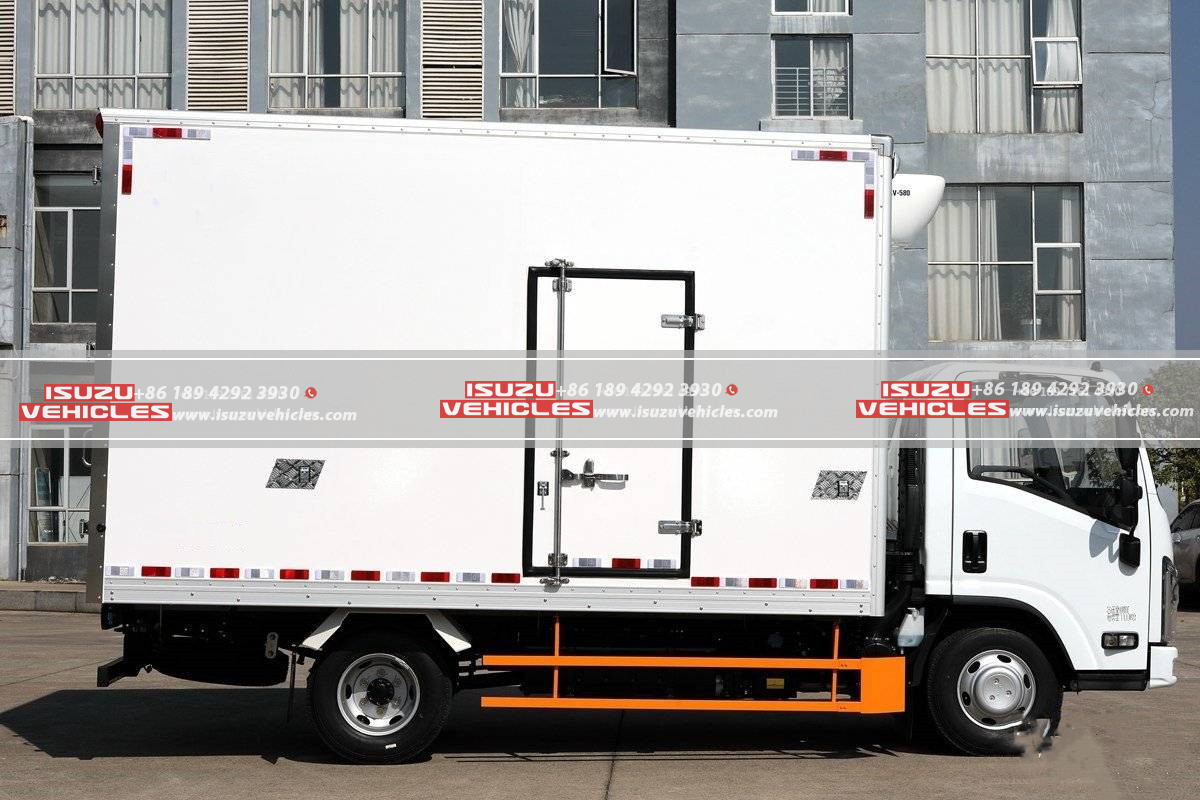
The Criticality of Thermal Stability in Transport
Maintaining precise temperature control in ISUZU refrigerated trucks transcends operational convenience—it’s a fundamental requirement for pharmaceutical integrity, food safety compliance, and chemical stability. Modern cold chain logistics demand tolerance bands as narrow as ±0.5°C for biologics and ±1.5°C for premium frozen goods, placing extraordinary pressure on refrigeration systems operating in environments ranging from Dubai’s 52°C summers to Siberia’s -40°C winters. The consequences of failure are severe: WHO estimates 25% of vaccines experience temperature excursions during transport, while FDA reports cite temperature deviations as primary factors in 34% of food recalls. ISUZU’s EcoFridge™ Series addresses these challenges through integrated engineering—pairing aerodynamic N-Series cab designs with microprocessor-controlled refrigeration units—but achieving consistent performance requires methodical maintenance discipline beyond standard cargo truck protocols.
Refrigeration Unit Maintenance Fundamentals
◼︎ Compressor & Condenser Optimization
The thermodynamic heart of any reefer unit demands meticulous attention:
- Oil viscosity management in scroll compressors, ensuring lubricant viscosity stays within 68-72 cSt at 40°C to prevent metal-on-metal wear during cold starts
- Condenser fin corrosion resistance through monthly alkaline washing and zinc sacrificial anode replacements in coastal operations
- Refrigerant charge verification using ultrasonic leak detectors sensitive to 0.1 oz/year losses (critical for R-452A low-GWP systems)
Pharmaceutical carrier BioLogix achieved 99.3% temperature compliance by implementing infrared thermography scans during preventative maintenance, identifying condenser airflow obstructions invisible to visual inspection.
◼︎ Evaporator & Airflow Integrity
Preserving air circulation efficiency requires:
- Defrost cycle calibration, adjusting termination sensors to stop cycles when coil temperature reaches +4°C (±0.3°C)
- Drain pan biocide treatments prevent microbial biofilm growth, which reduces heat transfer by 22%
- Seal integrity validation on evaporator housings usinga smoke machine, detecting airflow leaks >2 CFM
Structural & Insulation Maintenance
◼︎ Panel Integrity Protocols
The polyurethane composite panels in ISUZU bodies degrade through:
- Mechanical stress fractures at liftgate hinges and forklift impact zones
- Thermal bridging around structural members where metal penetrates the insulation
- Moisture ingress swells core materials and reduces R-value
Advanced detection methods include:
| Failure Mode | Detection Technology | Remediation |
|---|---|---|
| Core Delamination | Pulse-echo ultrasonography | Vacuum resin injection |
| Edge Seal Degradation | Thermal imaging at -20°C delta-T | Butyl tape replacement |
| Structural Weakness | Laser deflection mapping | Carbon fiber reinforcement |
◼︎ Door & Seal Maintenance
Double-panel cargo doors require quarterly:
- Gasket compression testing ensuring 12-15 psi contact pressure along entire perimeter
- Hinge alignment verification with laser levels preventing sag-induced gaps
- Impact sensor calibration on automated doors to avoid seal-damaging collisions
Power Management Systems
◼︎ Multi-Source Energy Reliability
Modern reefers juggle three power systems requiring distinct maintenance:
- Diesel-driven units: Clean-burn injector nozzles preventing carbon buildup during low-load standby
- Electric standby systems: Impedance testing on shore power connectors, detecting corrosion resistance >5Ω
- Hybrid battery packs: Electrolyte density balancing in lithium-titanate batterie,s maintaining ±0.01 g/cm³ variance
◼︎ Voltage Stability Assurance
Voltage sags below 200V cause 41% of compressor failures. Mitigation requires:
- Harmonic distortion analyzers detecting THD >8% from poor generator sets
- Automatic transfer switches exercising monthly under 80% load
- Ground integrity verification ensuring <0.5Ω resistance to chassis
Operational Temperature Control
◼︎ Loading Zone Management
Thermal stratification causes dangerous variations:
- Air curtain optimization, achieving ,2.5 m/s vertical velocity at the door opening
- Pre-cool validation requires cargo core temperature documentation before loading
- Pallet configuration rules maintain 15cm air channels near walls
◼︎ Dynamic Setpoint Strategies
Static temperature settings waste energy and risk products:
- Geofenced setpoint adjustment automatically lowers temps before mountain ascents
- Solar load compensation increases cooling during afternoon westbound routes
- Door event response triggers a rapid cooldown after 90+ second openings
Integrated Fleet Maintenance Synergy
True thermal security emerges when ISUZU refrigerated trucks operate within a data-integrated fleet ecosystem. ISUZU’s FleetNexus™ platform creates maintenance intelligence by cross-referencing:
- Compressor vibration profiles from reefers with ISUZU cargo truck transmission telemetry
- Insulation degradation rates correlated to route-specific vibration data from ISUZU box trucks
- Door cycle analytics compared against delivery frequency patterns across vehicle types
The platform’s predictive capabilities proved vital during Singapore’s 2024 port strike—automatically rescheduling 37 reefers’ maintenance before temperature-critical vaccine shipments. Maintenance data transforms into actionable intelligence through:
- AI-assisted failure forecasting identifies at-risk components 450 operating hours before likely failure
- Blockchain temperature logs create immutable quality records for FDA audits
- Remote firmware updates calibrating refrigeration logic based on aggregated fleet performance data
Temperature Control Maintenance Checklist
| System | Critical Task | Frequency | Tolerance |
|---|---|---|---|
| Refrigeration | Evaporator ΔP test | 500 hrs | <0.8 in H₂O |
| Insulation | Core moisture scan | Annual | <2% by weight |
| Doors | Seal compression check | Quarterly | 12-15 psi |
| Power | Voltage transient recording | Monthly | <300ms sags |
| Controls | Sensor calibration | Bi-annual | ±0.3°C |
Certifications: FSMA Sanitary Transport Rule | EU GDP Guidelines | ASHRAE Standard 189