
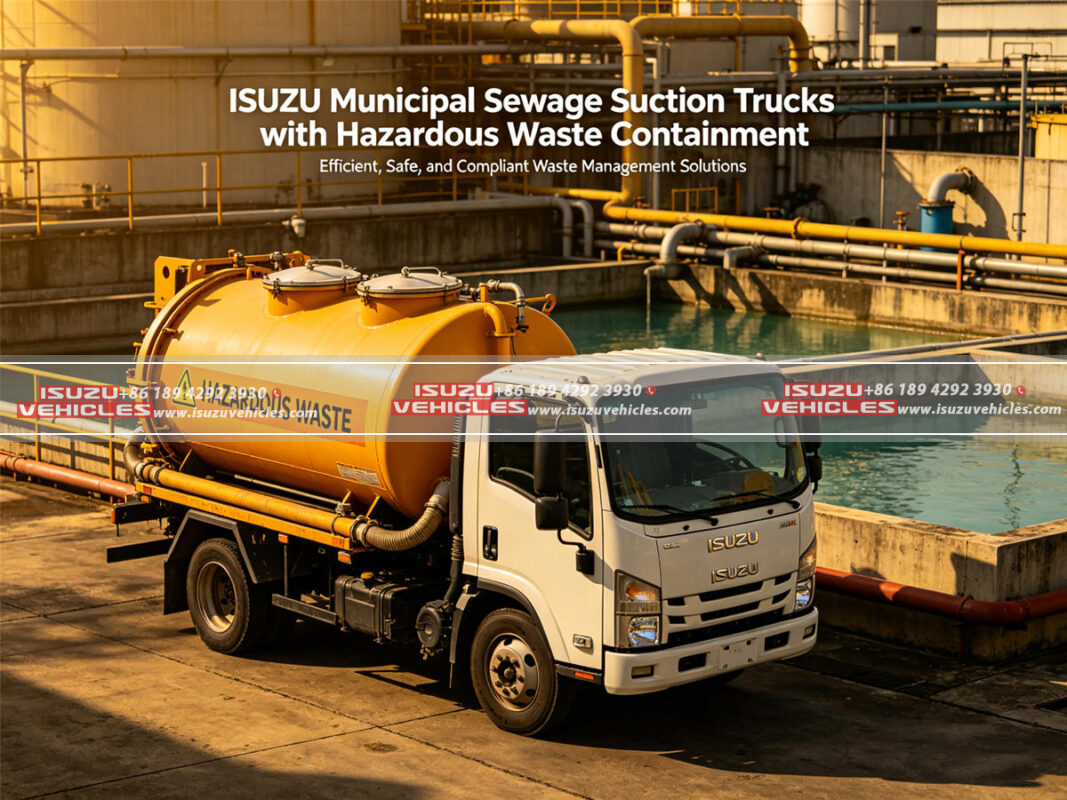
Understanding the Role of Municipal Sewage Suction Trucks
Municipal infrastructure depends heavily on efficient waste management systems, and among the most essential yet often overlooked components are sewage suction trucks, which are specifically engineered to handle the collection, transport, and disposal of liquid waste in urban and industrial environments. These vehicles play a critical role in maintaining sanitation standards, preventing environmental contamination, and supporting public health initiatives across cities of all sizes.
As urban populations continue to grow and wastewater systems become more complex, the need for advanced suction trucks equipped with hazardous waste containment capabilities has become increasingly important. Traditional systems are no longer sufficient when dealing with industrial byproducts, chemical residues, and other potentially dangerous materials that require careful handling, secure containment, and strict regulatory compliance.
The Importance of Hazardous Waste Containment
Handling municipal sewage is not just about removing waste, as it often involves managing substances that can pose serious risks to both human health and the environment if not properly contained and transported. Hazardous waste may include toxic chemicals, biological contaminants, and industrial effluents that require specialized equipment and procedures.
Effective containment systems ensure that these materials are securely stored within the vehicle, preventing leaks, spills, or exposure during transit. This is particularly critical in densely populated urban areas, where even a minor incident can have widespread consequences.
Moreover, regulatory frameworks governing hazardous waste management have become more stringent, requiring municipalities and contractors to adopt vehicles that meet specific safety and environmental standards. Investing in advanced sewage suction trucks with integrated containment systems is therefore not just a matter of efficiency but also of compliance and risk mitigation.
Key Features of Modern Sewage Suction Trucks
Modern sewage suction trucks are designed with a combination of mechanical strength, technological integration, and safety features that enable them to handle complex waste management tasks effectively.
High-Capacity Vacuum Systems
At the core of these vehicles is a powerful vacuum system capable of extracting liquid and semi-solid waste from underground tanks, sewer lines, and industrial facilities. These systems are designed to operate efficiently under varying conditions, ensuring consistent performance even in challenging environments.
The strength of the vacuum system directly impacts the speed and effectiveness of waste collection, making it a crucial factor in overall operational efficiency.
Advanced Tank Construction
The storage tanks used in these trucks are built with durable materials that resist corrosion and chemical damage, ensuring long-term reliability when handling hazardous substances. Many tanks are also equipped with internal coatings that provide an additional layer of protection against aggressive waste materials.
In addition, compartmentalized tank designs allow for the separation of different types of waste, reducing the risk of cross-contamination and enabling more efficient disposal processes.
Sealed Containment and Safety Mechanisms
One of the defining features of hazardous waste suction trucks is their sealed containment systems, which prevent the escape of harmful substances during transport. These systems often include pressure control valves, leak detection sensors, and emergency shut-off mechanisms that enhance safety.
Such features not only protect the environment but also ensure the safety of operators and the general public.
Applications Across Municipal and Industrial Sectors
Sewage suction trucks are used in a wide range of applications, extending beyond basic municipal waste collection to include specialized industrial and environmental services.
Urban Sewer Maintenance
In cities, these trucks are essential for cleaning and maintaining sewer systems, removing blockages, and preventing overflows that could lead to flooding or contamination. Regular maintenance using suction trucks helps extend the lifespan of infrastructure and reduces the likelihood of costly repairs.
Their ability to access hard-to-reach areas makes them indispensable for maintaining complex underground networks.
Industrial Waste Management
Industries such as manufacturing, chemical processing, and food production generate liquid waste that often contains hazardous components. Sewage suction trucks equipped with containment systems are used to safely transport this waste to treatment facilities, ensuring compliance with environmental regulations.
This capability is particularly important for industries that operate under strict oversight and must demonstrate responsible waste management practices.
Emergency Response and Environmental Protection
In the event of spills or environmental incidents, suction trucks play a vital role in rapid response efforts, helping to contain and remove hazardous materials before they can spread. Their mobility and efficiency make them ideal for addressing emergencies in both urban and remote locations.
These applications highlight the versatility of modern sewage suction trucks and their importance in protecting both public health and the environment.
Operational Efficiency and Cost Considerations
While the primary focus of sewage suction trucks is safety and effectiveness, operational efficiency remains a key consideration for municipalities and service providers looking to optimize their resources.
Fuel Efficiency and Engine Performance
Modern trucks are designed to balance power and fuel efficiency, ensuring that they can perform demanding tasks without excessive operating costs. Efficient engines reduce fuel consumption and emissions, contributing to more sustainable operations.
This balance is particularly important for fleets that operate continuously and cover large service areas.
Ease of Maintenance and Longevity
Durability and ease of maintenance are critical factors in determining the long-term value of these vehicles. High-quality components and robust construction reduce the frequency of repairs, while accessible designs make routine maintenance more straightforward.
Investing in reliable equipment helps minimize downtime and ensures consistent service delivery.
Operator Training and Safety
Even the most advanced truck requires skilled operators to function effectively. Proper training ensures that drivers and technicians understand how to use the equipment safely and efficiently, reducing the risk of accidents and improving overall performance.
This human element is an essential part of successful waste management operations.
Future Trends in Sewage Suction Truck Design
As technology continues to evolve, sewage suction trucks are becoming more advanced, incorporating new features that enhance performance, safety, and environmental sustainability.
Integration of Smart Technologies
The use of sensors, GPS tracking, and data analytics is transforming how these vehicles are managed, allowing operators to monitor performance in real time and optimize routes for greater efficiency. These technologies also provide valuable insights that can be used to improve maintenance schedules and reduce operational costs.
Smart systems are particularly useful for large fleets, where centralized management can lead to significant improvements in productivity.
Eco-Friendly Innovations
Environmental concerns are driving the development of more sustainable solutions, including alternative fuel options and improved emission control systems. These innovations help reduce the environmental impact of waste management operations while maintaining high performance standards.
As regulations become more stringent, adopting eco-friendly technologies will become increasingly important.
Enhanced Safety Features
Future designs are likely to include even more advanced safety mechanisms, such as automated containment systems and improved monitoring tools, further reducing the risks associated with handling hazardous waste.
These advancements reflect a broader commitment to safety and environmental responsibility within the industry.
In an increasingly complex urban landscape, the role of sewage suction trucks with hazardous waste containment capabilities cannot be overstated, as they provide the foundation for effective sanitation and environmental protection systems. Whether operating alongside a garbage truck in municipal services or supporting a sweeper truck in maintaining urban cleanliness, these specialized vehicles complement the broader ecosystem of ISUZU Vehicles, delivering reliability, safety, and performance where it matters most.