
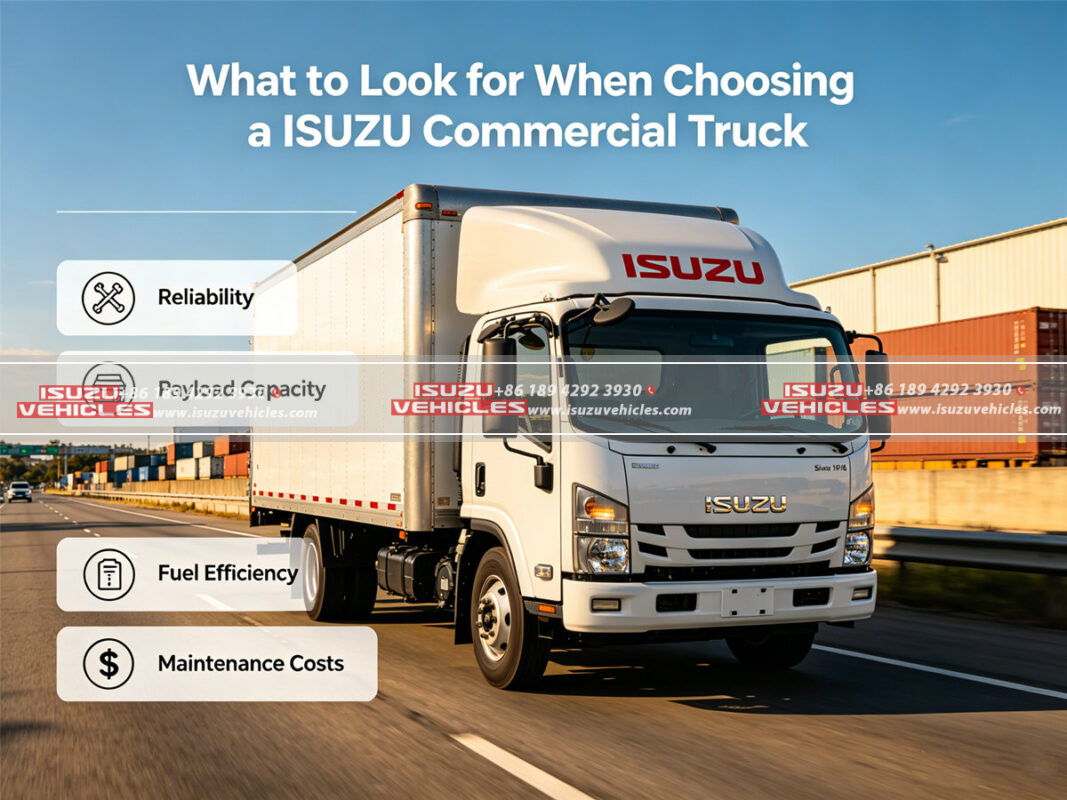
Understanding the Purpose and Operational Demands
Choosing the right commercial vehicle is rarely a simple purchase decision, because it directly affects how efficiently a business operates, how reliably goods or services are delivered, and how well long-term costs are controlled across the lifecycle of the vehicle. Before comparing models or brands, it is essential to clearly define the operational purpose, since a truck that performs exceptionally well in one application may be entirely unsuitable for another.
A company involved in urban delivery, for example, will prioritize maneuverability, fuel efficiency, and ease of loading, while a construction firm may require high payload capacity, structural strength, and the ability to operate on uneven terrain. Understanding these differences early helps narrow down the options and ensures that the selected commercial truck aligns with actual business needs rather than theoretical specifications.
Identifying Load Requirements and Capacity
One of the first and most practical considerations is determining how much weight and volume the truck will need to carry on a regular basis, rather than focusing only on maximum capacity figures provided by manufacturers. Overloading a truck leads to increased wear, higher maintenance costs, and potential safety risks, while underutilizing capacity can reduce operational efficiency.
Careful analysis of average load size, frequency of trips, and peak demand periods allows businesses to choose a truck that operates within its optimal range, ensuring both safety and cost-effectiveness.
Evaluating Route Conditions and Usage Environment
The environment in which the truck will operate plays a major role in determining the ideal configuration, as urban, rural, and industrial settings each present unique challenges. City routes often involve tight turns, heavy traffic, and frequent توقف, requiring compact designs and responsive handling.
In contrast, long-distance or off-road operations demand durability, stronger suspension systems, and higher power output to maintain performance over extended periods. Matching the vehicle to its environment is one of the most important steps in ensuring long-term reliability.
Engine Performance, Efficiency, and Reliability
The engine is the heart of any commercial truck, and its performance characteristics have a direct impact on operational efficiency, fuel consumption, and overall reliability. Selecting the right engine involves more than simply choosing the highest horsepower option; it requires a balanced understanding of power, torque, and efficiency.
Balancing Power and Fuel Economy
A powerful engine is essential for handling heavy loads and challenging terrains, but excessive power can lead to unnecessary fuel consumption if it exceeds operational requirements. The goal is to find a balance where the engine delivers sufficient torque for daily tasks while maintaining reasonable fuel efficiency.
This balance becomes particularly important for businesses with large fleets, where fuel costs represent a significant portion of operating expenses.
Long-Term Reliability and Maintenance Needs
Reliability is one of the most critical factors in choosing a commercial truck, as unexpected breakdowns can disrupt operations and lead to costly delays. Engines that are designed for durability, with proven performance records and accessible maintenance systems, are often a better investment than those that prioritize short-term performance gains.
Regular maintenance schedules, availability of spare parts, and service network coverage should all be considered when evaluating engine reliability.
Emission Standards and Environmental Considerations
Modern commercial trucks must comply with increasingly strict emission regulations, particularly in urban areas where environmental policies are more stringent. Choosing a vehicle that meets or exceeds these standards not only ensures compliance but also supports sustainability goals.
Fuel-efficient engines with lower emissions contribute to both environmental responsibility and long-term cost savings.
Design, Safety, and Driver-Centric Features
Beyond performance, the overall design of a commercial truck plays a crucial role in safety, usability, and driver satisfaction, all of which influence operational efficiency and business outcomes.
Cabin Comfort and Ergonomics
Drivers often spend long hours behind the wheel, making cabin comfort an important factor in maintaining productivity and reducing fatigue. Features such as adjustable seating, intuitive controls, and effective climate systems contribute to a more comfortable working environment.
An ergonomic design not only improves driver well-being but also enhances focus and reduces the likelihood of errors.
Safety Systems and Operational Protection
Safety should never be compromised when selecting a commercial truck, as it protects both the driver and the cargo while reducing the risk of accidents. Modern trucks are equipped with advanced safety features such as anti-lock braking systems, stability control, and collision warning systems.
These technologies are especially valuable in challenging driving conditions, where quick प्रतिक्रिया and vehicle stability are essential.
Body Configuration and Versatility
The physical configuration of the truck, including its body type and adaptability, determines how effectively it can be used across different tasks. Some businesses may require specialized bodies for specific applications, while others benefit from flexible designs that can be modified over time.
For example, a garbage truck requires a completely different setup compared to a delivery vehicle, highlighting the importance of choosing the right configuration from the start.
Total Cost of Ownership and Long-Term Value
While the purchase price is often the most visible cost, it represents only a portion of the total investment required to operate a commercial truck over its lifespan. A more comprehensive evaluation considers all costs associated with ownership and operation.
Initial Investment vs Operational Costs
A lower upfront price may seem attractive, but it can lead to higher long-term expenses if the vehicle requires frequent repairs or consumes more fuel. Conversely, a slightly higher initial investment in a reliable and efficient truck can result in significant savings over time.
Evaluating both short-term and long-term costs provides a clearer picture of overall value.
Maintenance, Parts, and Service Availability
Access to maintenance services and spare parts is essential for keeping a commercial truck operational. Vehicles supported by a strong service network and readily available components reduce downtime and simplify fleet management.
This is particularly important for businesses that rely on continuous operations.
Resale Value and Lifecycle Planning
A truck with strong resale value offers additional financial benefits, as it allows businesses to recover a portion of their investment when upgrading their fleet. Brands known for durability and reliability often retain value better over time.
Planning for the entire lifecycle of the vehicle ensures that it remains a productive asset rather than a liability.
Making a Practical and Informed Decision
Selecting the right commercial truck ultimately comes down to aligning operational needs, performance requirements, and financial considerations in a way that supports long-term business success. By focusing on purpose, reliability, design, and total cost, businesses can make informed decisions that maximize efficiency and minimize risk.
In real-world operations, commercial trucks often work alongside specialized vehicles such as a bucket truck for elevated maintenance tasks or a garbage truck for waste management, forming integrated fleets that handle diverse responsibilities, all supported by the engineering reliability and proven performance associated with ISUZU Vehicles.