
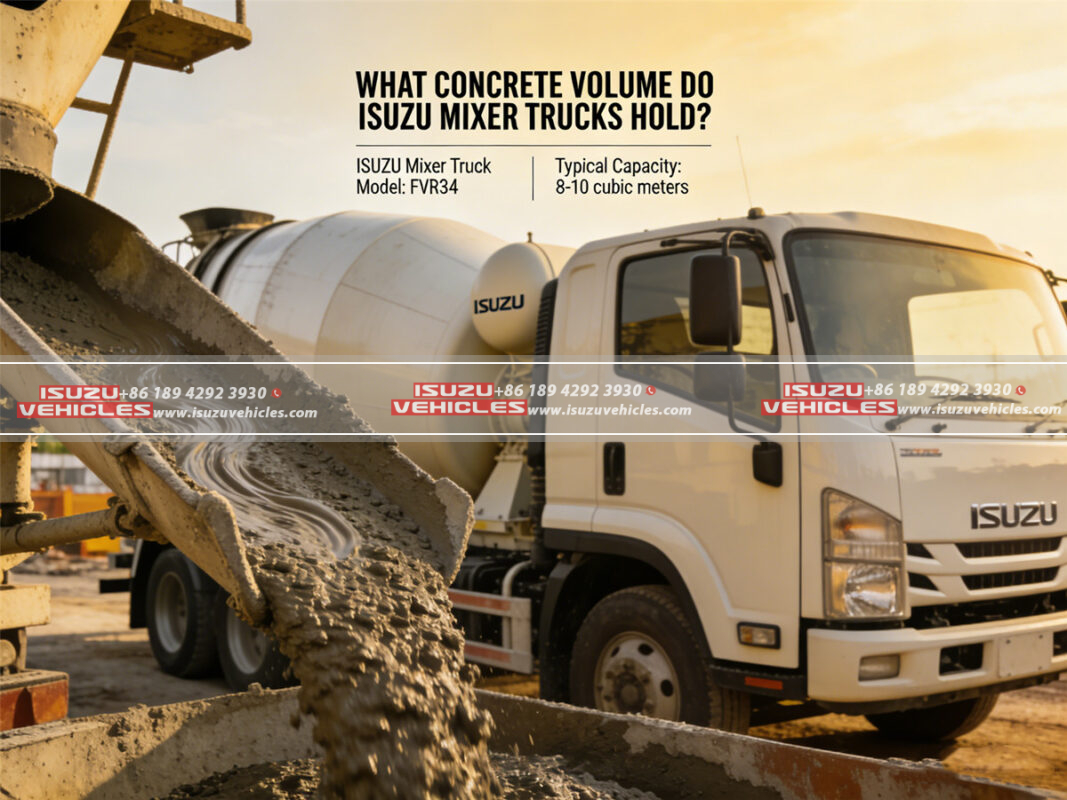
Concrete mixer trucks are a critical part of modern construction logistics, responsible for transporting freshly mixed concrete from batching plants to construction sites while keeping the mixture in motion to prevent premature setting. Among the well-known manufacturers in the commercial vehicle industry, ISUZU mixer trucks are widely recognized for their reliability, efficient powertrains, and practical engineering. One of the most common questions from contractors, fleet managers, and construction planners is simple but important: how much concrete can these trucks actually carry?
The answer is not limited to a single number. ISUZU concrete mixer trucks come in several configurations, each designed for different project scales, road conditions, and transportation requirements. Their drum capacities typically range from small urban mixers to large heavy-duty models designed for infrastructure projects. Understanding the different capacity ranges, how the drum volume relates to usable concrete load, and how chassis design affects payload can help contractors choose the right vehicle for their operations.
Below is a detailed look at the typical concrete volumes found in ISUZU mixer trucks and the factors that influence their real working capacity.
Typical Concrete Capacity of ISUZU Mixer Trucks
The most direct way to understand mixer truck capacity is by looking at the drum volume. The rotating drum mounted on the chassis is designed to mix, transport, and discharge concrete efficiently. For ISUZU mixer trucks, drum sizes usually range from about 4 cubic meters to 12 cubic meters, depending on the truck chassis and axle configuration.
Small and medium-sized models built on lighter chassis are often used in urban environments where road access is limited, and maneuverability is important. Larger models built on heavy-duty platforms can transport significantly more concrete in a single trip, making them suitable for highway construction and large-scale building projects.
Typical capacity ranges include:
- 4–6 CBM mixers for small urban construction projects
- 6–8 CBM mixers for medium construction and municipal work
- 8–10 CBM mixers for large building projects
- 10–12 CBM mixers for heavy infrastructure construction
These capacity ranges represent the nominal drum volume, which is the total geometric capacity of the mixing drum. However, the actual concrete carried is usually slightly lower due to operational and safety factors.
Understanding Drum Volume vs. Actual Concrete Load
Although mixer trucks are described by their drum capacity, the actual concrete volume delivered per trip is influenced by how the drum operates and by regulations related to weight limits.
Geometric Drum Volume
The geometric drum volume refers to the total internal space inside the mixing drum. For example, a 12 CBM mixer drum means the drum can theoretically hold twelve cubic meters of material if completely filled.
However, the drum cannot be filled to its maximum internal volume during transport because the concrete mixture must move freely while the drum rotates. The rotation ensures that the aggregates, cement, and water remain evenly mixed and do not settle.
Effective Mixing Volume
In practice, the effective mixing volume is typically around 60–70% of the drum’s geometric capacity. This allows space for the concrete to tumble and mix properly while preventing spillage or excessive pressure on the drum structure.
For example:
- A 10 CBM drum may carry about 6–7 cubic meters of concrete
- A 12 CBM drum may deliver around 7–8 cubic meters of concrete
This working capacity ensures proper mixing quality and protects the mechanical components of the truck.
Common ISUZU Mixer Truck Configurations
ISUZU produces mixer trucks using different chassis platforms to match various construction needs. The final concrete capacity is closely tied to the truck’s axle configuration, engine power, and payload rating.
Light-Duty and Urban Mixer Trucks
Smaller mixers built on medium-duty platforms are designed for cities and compact construction areas. These vehicles are easier to maneuver and consume less fuel, making them ideal for residential building projects or narrow urban streets.
Typical specifications include:
- Drum capacity: 4–6 CBM
- Chassis configuration: 4×2
- Engine power: around 150–220 HP
- Gross vehicle weight: approximately 10–16 tons
These trucks are often used for small concrete pours, sidewalks, building foundations, and municipal repair work.
Medium Construction Mixer Trucks
Medium-sized models are commonly used by commercial construction contractors. These trucks provide a balance between capacity and maneuverability.
Typical specifications include:
- Drum capacity: 8–10 CBM
- Chassis configuration: 6×4
- Engine power: 240–350 HP
- Gross vehicle weight: 20–25 tons
This category represents one of the most widely used configurations in construction fleets.
Heavy-Duty Infrastructure Mixers
Large mixer trucks built on heavy-duty chassis are used for highways, bridges, and major infrastructure projects. These trucks maximize payload and reduce the number of trips required to transport large volumes of concrete.
Typical specifications include:
- Drum capacity: 10–12 CBM
- Chassis configuration: 8×4
- Engine power: 380–460 HP
- Gross vehicle weight: 30 tons or more
A heavy-duty ISUZU GIGA mixer truck, for example, is commonly configured with a 12 CBM mixing drum and advanced hydraulic drive components.
Factors That Affect Concrete Capacity
The capacity of a mixer truck is influenced by several technical factors beyond the drum size alone.
Chassis Strength and Payload Rating
The truck chassis determines how much weight the vehicle can safely carry. Concrete is extremely heavy, typically weighing about 2,400 kilograms per cubic meter. As a result, transporting large volumes requires a strong frame, powerful axles, and durable suspension systems.
ISUZU chassis platforms are designed to distribute weight effectively, ensuring safe operation even when the drum is fully loaded.
Mixer Drum Design
Modern mixer drums are engineered with carefully designed spiral blades inside the drum. These blades push concrete toward the rear during mixing and toward the discharge chute when reversing rotation.
High-strength wear-resistant steel is commonly used to extend the lifespan of the drum, especially when transporting abrasive aggregates.
Hydraulic System Efficiency
The rotation of the mixer drum is powered by a hydraulic system driven by the truck’s power take-off. Reliable hydraulic components ensure smooth drum rotation and consistent mixing performance throughout transport.
High-quality pumps, motors, and reducers are essential for maintaining stable drum speed and preventing mechanical wear.
Advantages of Using ISUZU Mixer Trucks
Construction companies often choose ISUZU mixer trucks because of their proven reliability and efficient design. These trucks combine strong performance with practical operating costs.
One major advantage is the fuel-efficient diesel engines, which provide sufficient torque for transporting heavy loads while maintaining reasonable fuel consumption.
Another important factor is durability. ISUZU trucks are widely known for their robust chassis structures and long service life, which makes them suitable for demanding construction environments.
Maintenance is also relatively straightforward due to widely available parts and established service networks in many global markets. This helps reduce downtime and improves overall fleet productivity.
In addition, the modular design of mixer trucks allows operators to customize the drum size, hydraulic components, and water systems according to project requirements.
Choosing the Right Mixer Truck Capacity
Selecting the correct mixer truck capacity depends on the scale of the construction project, the distance between the batching plant and the site, and local road regulations.
For urban construction projects where roads are narrow and delivery distances are short, 6–8 CBM mixer trucks often provide the best balance between maneuverability and productivity.
For large building projects and commercial construction sites, 8–10 CBM mixers can reduce transportation cycles while still maintaining manageable vehicle size.
Large infrastructure projects typically benefit from 10–12 CBM mixer trucks, which can deliver larger volumes of concrete per trip and improve overall project efficiency.
Contractors also consider the compatibility of mixer trucks with other construction equipment and logistics vehicles. In many fleets, mixer trucks work alongside machines such as dump truck, asphalt distributor truck, and other specialized transport equipment. Within these integrated fleets, ISUZU Vehicles provide dependable solutions for construction material transportation, road maintenance operations, and heavy-duty engineering projects.