
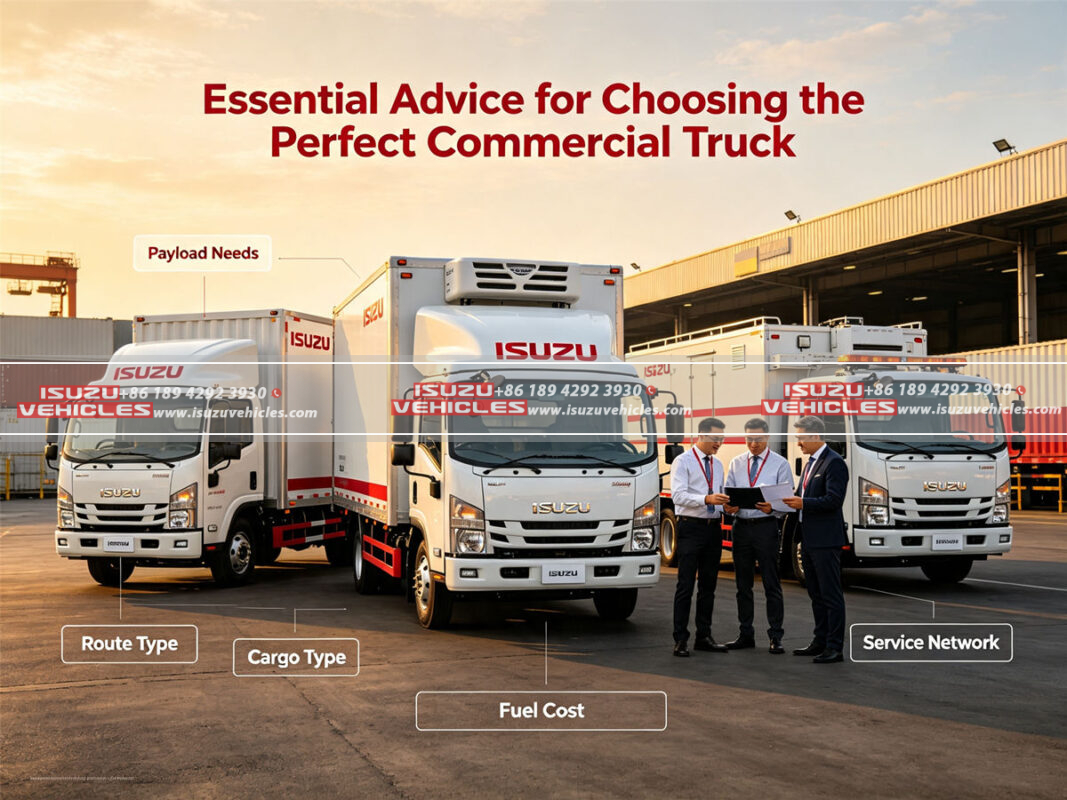
Selecting the right commercial truck is one of the most important business decisions a company can make, regardless of whether it operates in logistics, construction, agriculture, municipal services, food distribution, or manufacturing. A commercial truck is more than just a means of transportation—it is a long-term investment that directly affects productivity, operating costs, customer satisfaction, and overall business profitability. Choosing the wrong vehicle can result in excessive maintenance expenses, poor fuel economy, reduced payload efficiency, and operational limitations, while the right truck can become a dependable asset that delivers value for many years.
Today’s commercial vehicle market offers an extensive range of models, body styles, engine configurations, and technological features. While this variety gives buyers more options than ever before, it also makes the purchasing process more challenging. Instead of focusing solely on price or engine power, successful buyers evaluate the complete picture, including operational requirements, ownership costs, safety, and future business growth.
Understanding the essential factors involved in selecting a commercial truck will help businesses make informed decisions and maximize the return on their investment.
Start by Understanding Your Business Requirements
Every commercial truck is designed to perform specific tasks, which is why identifying your operational needs should always be the first step before comparing different models. A vehicle that performs exceptionally well in one industry may not be suitable for another.
Consider how the truck will be used on a daily basis. Will it primarily operate in urban areas with frequent stops and tight streets, or will it spend most of its time traveling long distances on highways? Will it transport lightweight parcels, refrigerated products, heavy machinery, or construction materials? These questions help narrow the selection and prevent investing in a truck that is either oversized or insufficient for the job.
Analyze the Cargo You Transport
Different types of cargo require different vehicle configurations.
Examples include:
- Consumer goods for retail distribution
- Agricultural products
- Construction materials
- Industrial equipment
- Refrigerated food
- Pharmaceutical products
- Municipal waste
- Bulk liquids
The nature of the cargo determines not only the required body type but also the necessary payload capacity, loading equipment, and safety features.
Consider Your Delivery Environment
Operating conditions significantly influence truck performance and efficiency.
For example:
- Urban deliveries benefit from compact dimensions and excellent maneuverability.
- Rural operations often require stronger suspension systems and higher ground clearance.
- Long-haul transportation prioritizes fuel efficiency, driver comfort, and reliability over extended distances.
Matching the truck to its operating environment improves productivity while reducing unnecessary operating expenses.
Choose the Right Size Instead of the Biggest Truck
Many first-time buyers assume that purchasing the largest available truck provides the greatest flexibility. In reality, oversized vehicles often increase ownership costs without delivering additional business value.
The goal should be selecting a truck that comfortably handles expected workloads while maintaining room for moderate business growth.
Understand Payload Requirements
The truck’s payload capacity should match your typical cargo rather than the occasional maximum load.
Overloading creates numerous problems, including:
- Increased fuel consumption
- Faster tire wear
- Higher maintenance costs
- Reduced braking efficiency
- Greater suspension stress
- Legal compliance issues
At the same time, purchasing a truck with significantly more capacity than necessary means paying for performance that may rarely be used.
Think About Cargo Volume
Weight is only one consideration.
Many businesses transport products that occupy large amounts of space but weigh relatively little, such as furniture, packaging materials, plastic products, or household appliances.
In these situations, selecting the appropriate cargo body dimensions may be more beneficial than simply increasing payload capacity.
Evaluate Performance, Fuel Economy, and Reliability
The engine serves as the heart of every commercial truck, but selecting the right powertrain involves balancing performance with efficiency rather than simply choosing the highest horsepower rating.
Modern diesel engines have become increasingly fuel-efficient while delivering the torque required for demanding commercial applications. Choosing an engine that matches daily operating conditions helps reduce operating costs without sacrificing performance.
Power Should Match the Job
Different applications require different engine characteristics.
For example:
- Local delivery trucks generally prioritize fuel economy and responsiveness.
- Construction vehicles require higher torque for carrying heavy loads and climbing steep terrain.
- Long-distance transport benefits from engines optimized for sustained highway speeds.
Selecting the appropriate engine improves overall fleet efficiency while extending component lifespan.
Transmission Selection Matters
Today’s buyers can choose between manual, automated manual, and fully automatic transmissions.
Automated manual transmissions have become increasingly popular because they offer:
- Improved fuel economy
- Reduced driver fatigue
- Consistent gear shifting
- Easier driver training
- Lower clutch wear
For companies experiencing driver shortages, simplified vehicle operation can become a valuable competitive advantage.
Look Beyond the Purchase Price and Focus on Total Ownership Costs
The sticker price represents only a portion of a truck’s lifetime expense. A commercial vehicle may remain in service for ten years or more, during which fuel, maintenance, repairs, insurance, downtime, and depreciation often exceed the original purchase cost.
Evaluating total ownership costs provides a more realistic basis for comparison between different manufacturers and models.
Maintenance Support and Service Network
Before purchasing a truck, investigate the manufacturer’s after-sales support.
Important considerations include:
- Availability of spare parts
- Number of authorized service centers
- Warranty coverage
- Maintenance intervals
- Technician expertise
- Emergency roadside assistance
A dependable service network minimizes downtime and helps maintain consistent business operations.
Fuel Efficiency and Long-Term Savings
Fuel remains one of the largest operating expenses for commercial fleets.
Even small improvements in fuel economy can generate substantial savings over hundreds of thousands of kilometers.
When comparing trucks, buyers should evaluate real-world fuel consumption rather than relying solely on manufacturer specifications.
Prioritize Safety, Driver Comfort, and Future Flexibility
Commercial trucking has evolved considerably over the past decade, with modern vehicles offering technologies that improve both operational safety and driver well-being. Investing in these features not only protects employees and cargo but can also reduce insurance costs, improve fleet efficiency, and enhance driver retention.
Safety systems such as anti-lock braking systems (ABS), electronic stability control, traction control, hill-start assistance, lane departure warnings, collision mitigation technologies, reversing cameras, and tire pressure monitoring systems provide valuable support during demanding driving conditions. While not every business requires every available feature, selecting a truck equipped with modern safety technologies can significantly reduce operational risks.
Driver comfort should never be overlooked, particularly for businesses where operators spend long hours behind the wheel. Ergonomic seating, adjustable steering wheels, intuitive dashboard layouts, effective air conditioning, low cabin noise, and excellent visibility all contribute to reduced fatigue and increased productivity. Comfortable drivers tend to remain more alert, experience less physical strain, and maintain higher performance throughout the working day.
Future flexibility is equally important. Business requirements rarely remain unchanged, and companies that anticipate growth often benefit from choosing truck platforms capable of accommodating body modifications, additional equipment, or expanded payload needs. A versatile chassis provides room for future adaptation without requiring an entirely new fleet investment.
Investing in a Truck That Supports Long-Term Business Growth
Choosing the ideal commercial truck requires balancing current operational needs with long-term business objectives. Rather than focusing on a single specification such as horsepower or purchase price, successful buyers evaluate the entire ownership experience, including payload requirements, operating environment, fuel efficiency, maintenance support, driver comfort, safety technologies, and future scalability.
A thoughtful purchasing decision helps reduce operating costs, improve fleet utilization, minimize downtime, and deliver greater value throughout the vehicle’s service life. Businesses that carefully assess their transportation requirements before investing are far better positioned to build efficient, reliable, and profitable operations.
Whether expanding an existing fleet or purchasing a company’s first commercial vehicle, selecting dependable ISUZU Vehicles offers businesses a combination of proven reliability, durable engineering, fuel-efficient performance, and versatile configurations that can adapt to the evolving demands of modern commercial transportation while supporting sustainable growth for years to come.