
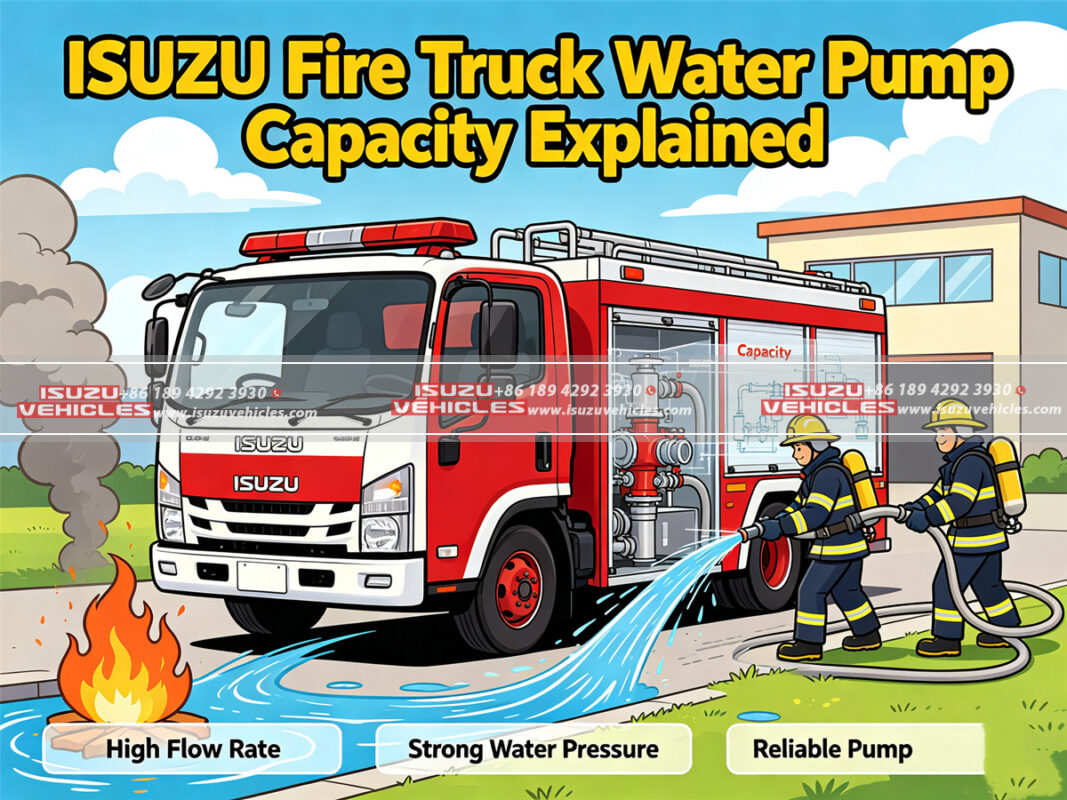
Understanding the Role of Water Pump Capacity in ISUZU Fire Trucks
In modern firefighting operations, the effectiveness of an emergency response vehicle is not determined solely by its speed or water tank size, but significantly by the performance of its water pumping system. The ISUZU Fire Truck water pump capacity is one of the most critical technical parameters that directly influences how quickly and efficiently a fire can be controlled, especially in high-risk environments such as industrial zones, residential complexes, and large-scale infrastructure facilities.
A fire truck pump is responsible for drawing water from onboard tanks, external reservoirs, or hydrants, and delivering it at high pressure through hoses and nozzles to suppress flames. In the case of ISUZU based fire trucks, the pump systems are engineered to maintain stable pressure output even under continuous operation, which is essential during prolonged rescue missions where water demand can fluctuate rapidly.
Water pump capacity is generally measured in liters per minute (L/min) or gallons per minute (GPM), and different ISUZU fire truck configurations may feature varying capacities depending on their intended use. Urban firefighting units may prioritize balanced flow and maneuverability, while industrial or airport fire units often require extremely high-capacity pumps capable of delivering large volumes of water in a short time.
Core Pumping System Design and Technical Structure
The performance of an ISUZU fire truck’s water pump system is the result of carefully engineered mechanical components working in coordination to ensure consistent pressure, durability, and responsiveness under extreme conditions.
Centrifugal Pump Technology and Flow Stability
Most ISUZU fire trucks utilize centrifugal pump systems, which are known for their ability to deliver continuous water flow with stable pressure. These pumps operate by converting mechanical energy from the engine or auxiliary power unit into hydraulic energy, allowing water to be propelled through the system efficiently.
The advantage of this design lies in its simplicity and reliability, especially when operating in unpredictable firefighting environments. Even when water sources vary in pressure or supply, the pump system can adjust and maintain consistent output, ensuring uninterrupted firefighting operations.
Pressure Regulation and Output Control Systems
Another essential component is the pressure regulation system, which allows firefighters to control water discharge according to situational needs. High-pressure settings are typically used for long-range fire suppression, while lower pressure modes are used for closer, more controlled operations such as interior building firefighting.
ISUZU fire trucks are often equipped with intuitive control panels that allow operators to adjust pump output quickly, even under stressful conditions. This level of control ensures that water resources are used efficiently without compromising firefighting effectiveness.
Water Pump Capacity Range and Operational Performance
The water pump capacity in ISUZU fire trucks varies depending on model configuration, mission requirements, and regional firefighting standards. However, most systems fall within a range that supports both urban and industrial emergency response scenarios.
Urban Firefighting Pump Requirements
In city environments, ISUZU fire trucks are typically equipped with medium-capacity pumps that balance water output with vehicle mobility. These systems are designed to support rapid response missions where access to hydrants is relatively available, allowing firefighters to sustain operations without relying solely on onboard water reserves.
Such configurations prioritize efficiency, enabling quick deployment in traffic-congested areas while maintaining sufficient pressure to handle residential and commercial fires effectively.
Industrial and High-Capacity Fire Operations
In contrast, industrial fire scenarios require significantly higher pump capacities. These may include chemical plants, warehouses, or fuel storage facilities where fire intensity is much greater and continuous water flow is essential.
High-capacity ISUZU fire truck pumps are engineered to deliver large volumes of water per minute, often supported by foam mixing systems to enhance fire suppression effectiveness. This makes them suitable for prolonged operations where both intensity and duration of firefighting efforts are critical factors.
Integration with Tank Systems and Auxiliary Equipment
The effectiveness of a fire truck pump system is closely tied to its integration with onboard water storage and auxiliary firefighting equipment, creating a fully functional emergency response platform.
Onboard Water Tank Coordination
The tanker truck configuration plays a crucial role in ensuring that water is readily available for pump systems during initial response phases. These tanks are designed with large capacities to support immediate firefighting before external water sources are accessed.
The coordination between tank output and pump intake is carefully calibrated to avoid pressure loss or cavitation, ensuring that water flow remains steady even during high-demand operations. This integration is essential for maintaining operational continuity during the most critical stages of fire suppression.
Foam Systems and Enhanced Fire Suppression
In addition to water, many ISUZU fire trucks are equipped with foam mixing systems that enhance their ability to combat chemical and fuel-based fires. The pump system regulates both water and foam concentrate, ensuring a balanced mixture that improves fire extinguishing efficiency.
This capability is particularly important in industrial environments where water alone may not be sufficient to control hazardous material fires. The flexibility of ISUZU pump systems allows operators to switch between water and foam modes depending on situational requirements.
Operational Efficiency and Field Performance in Rescue Missions
The real value of an ISUZU fire truck water pump system is best understood through its performance in actual emergency scenarios, where reliability and speed can directly impact survival outcomes and property protection.
Rapid Deployment and Continuous Operation
One of the defining strengths of ISUZU fire trucks is their ability to achieve rapid pump activation immediately after arrival at the scene. This minimizes response time and ensures that water is delivered to the fire source without delay.
Once activated, the pump system is capable of maintaining continuous operation for extended periods, which is essential in large-scale fire incidents where suppression efforts may last several hours or even longer.
Adaptability Under Extreme Conditions
Fire environments are often unpredictable, with fluctuating heat levels, structural instability, and limited visibility. ISUZU pump systems are designed to operate reliably under such conditions, maintaining consistent pressure output even when external factors are unstable.
This adaptability ensures that firefighters can focus on strategy and rescue operations without worrying about equipment failure or performance inconsistency.
Maintenance Standards and Long-Term Pump Reliability
Ensuring long-term performance of fire truck pump systems requires structured maintenance practices, regular inspections, and adherence to operational standards, all of which are integral to ISUZU’s engineering philosophy.
Routine Inspection and System Calibration
Regular inspection of pump components, including seals, valves, and pressure gauges, is essential to maintaining optimal performance. Calibration ensures that output levels remain accurate and consistent, reducing the risk of operational failure during emergencies.
ISUZU fire trucks are designed with maintenance accessibility in mind, allowing technicians to perform inspections efficiently and reduce downtime for emergency fleets.
Durability and Lifecycle Efficiency
The materials used in ISUZU pump systems are selected for their resistance to corrosion, heat, and mechanical wear. This ensures that even under frequent use, the system maintains structural integrity and operational reliability over long service periods.
Combined with ISUZU’s robust chassis engineering, this creates a firefighting platform that is both durable and cost-effective for long-term fleet management.
As firefighting technology continues to evolve, the integration of specialized emergency units such as Refrigerated truck systems for disaster relief logistics and multi-role support vehicles further expands the scope of emergency response capabilities. Within this broader ecosystem, ISUZU Vehicles continue to provide a dependable foundation for firefighting, rescue missions, and specialized emergency operations worldwide.