
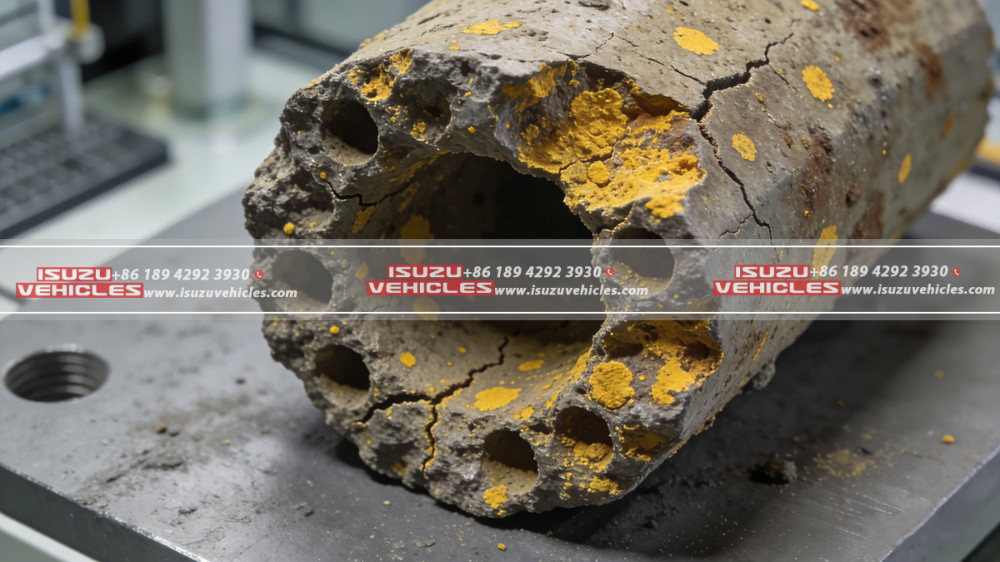
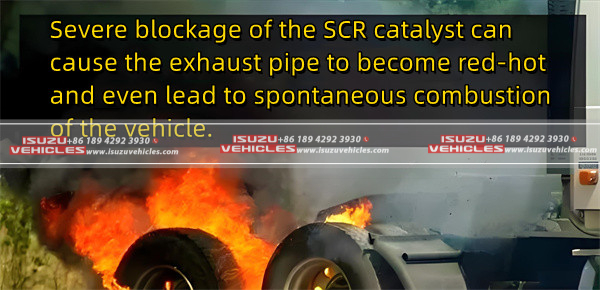
SCR catalyst blockage has become a widespread issue. This is primarily due to the harsh working environment of SCR catalysts and their unique chemical conversion-reduction mechanism. During long-term use, it may encounter various failures, such as reduced engine power, startup difficulties, and excessive exhaust emissions, which may interfere with our diagnosis. More seriously, severe SCR catalyst blockage may cause exhaust pipe overheating and even trigger vehicle spontaneous combustion.
Next, we will explore the eight main factors causing SCR catalyst blockage:
The SCR catalyst working in a long-term high-temperature environment will experience high-temperature deactivation. When the SCR catalyst operates at high temperatures, the oxygen storage capacity of oxidation promoters weakens, affecting catalyst activity and leading to deactivation. High temperatures reduce the oxygen storage capacity of oxidation promoters inside the SCR catalyst, thereby diminishing the catalyst’s oxygen absorption capacity and significantly lowering its activity. Even with a well-maintained engine and proper calibration, improper usage may cause excessively high SCR catalyst temperatures.
Analysis of High-Temperature Causes in SCR Catalysts
The causes of high temperatures in SCR catalysts are diverse, mainly including:
First, engine misfires causing unburned air-fuel mixtures to undergo intense exothermic oxidation reactions in the catalyst;
Second, continuous high-speed, high-load operation also raises catalyst temperatures;
Additionally, sudden braking or deceleration may similarly increase catalyst temperature;
Furthermore, prolonged idling, especially continuous idling exceeding 10 minutes, accumulates heat in the catalyst;
Meanwhile, coasting with the ignition switched off during driving and overly rich air-fuel mixtures will both impact catalyst temperature.
Noble metal catalysts in SCR catalysts (e.g., platinum, palladium) strongly adsorb harmful substances such as sulfur, phosphorus, carbon monoxide, incomplete combustion products, lead, and manganese. Noble metal catalysts adsorb pollutants to form carbon deposits, leading to catalyst failure. Common poisoning sources include fuel additives. Under intense catalytic oxidation, these substances further undergo oxidation, condensation, and polymerization reactions, ultimately forming gummy carbon deposits. These deposits gradually accumulate and block the SCR catalyst, reducing its catalytic efficiency or causing failure—a phenomenon termed “chemical poisoning.” “Poisoning” essentially means the catalyst carrier surface is covered by foreign substances, preventing exhaust pollutants from contacting the catalyst and thus disabling its catalytic function.

Causes of SCR Catalyst Poisoning
A. Manganese and lead additives in fuel and engine oil;
B. Carbon monoxide from incomplete fuel combustion;
C. High sulfur content in diesel easily forming chemical complexes in SCR catalysts.
These “poisons” primarily adsorb onto the catalyst’s active surface, forming chemisorption complexes. Notably, lead and manganese poisoning are often irreversible; catalysts may lose all activity within hours in lead-contaminated environments. However, sulfur, phosphorus, and carbon monoxide poisoning may be reversible under specific conditions.
Carbon deposit blockage in SCR catalysts is a gradual accumulation process that is reversible. Carbon deposit blockage involves complex processes requiring oxidation/gasification for removal, mainly covering catalytic surfaces. Chemical methods (e.g., oxidation, gasification) and physical methods (e.g., desorption, volatile component evaporation) can reduce carbon deposits. Yet, when carbon deposits cover SCR catalyst surfaces and coatings, SCR catalyst failure occurs. These deposits are complex mixtures containing carbon, hydrogen, sulfur, nitrogen, oxygen, heavy metals, and other elements.
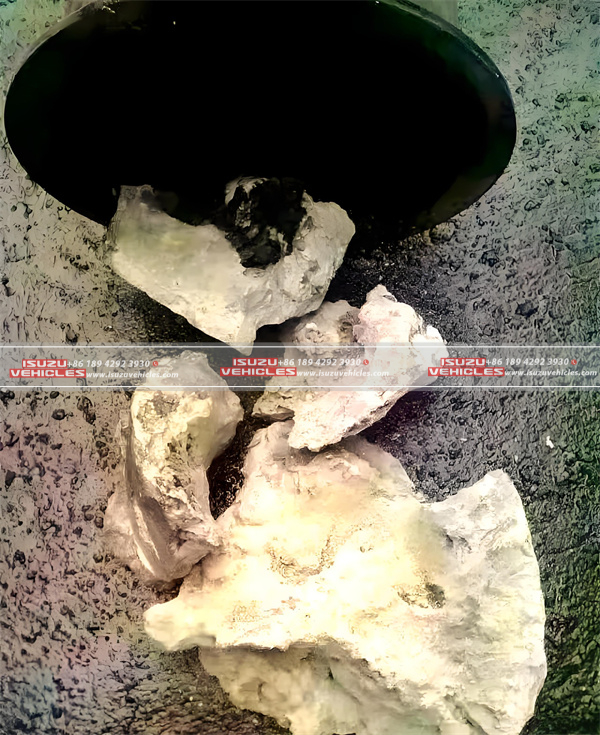
Common Types of Carbon Deposit Blockage in SCR Catalysts
A. Blockage caused by gummy carbon deposit sintering.
B. Blockage from sulfur-phosphorus chemical complex sintering.
C. Blockage due to lead-manganese metal deposit sintering.
D. Melted catalyst carrier and blockage from engine misfires.
E. Sealant between the SCR catalyst carrier and the metal shell powderizing from high-temperature aging due to misfires, blocking the rear catalytic carrier.
During traffic congestion, frequent vehicle acceleration/deceleration increases incomplete combustion products. Acceleration/deceleration increases incomplete combustion products, easily blocking SCR catalysts. This readily causes SCR catalyst blockage.

During “non-disassembly” cleaning maintenance, large amounts of gummy carbon deposits are flushed down. Cleaning washes carbon deposits into the SCR, causing blockage and increased fuel consumption. These deposits easily enter the SCR catalyst and cause blockage. This is also why some vehicles exhibit increased fuel consumption after non-disassembly cleaning maintenance.
The core component of SCR catalysts is a ceramic or metal catalytic carrier. If a vehicle equipped with such a catalyst suffers a severe impact in an undercarriage scraping accident, damaged ceramic fragments may enter the engine, causing severe wear. The catalyst ceramic core may fracture, rendering it inoperable. Additionally, during sudden deceleration, fragmented ceramic powder may be sucked into cylinders by exhaust pressure, causing severe engine wear or failure.
The fuel supply system of diesel vehicles is prone to malfunctions. Though modern engine control systems feature self-protection (e.g., automatically cutting off fuel injection during cylinder failure to protect the engine/catalyst), vehicles with this function remain uncommon. Fuel system issues or improper operation damage the catalysts. Avoid push-starting engines, as it may flood the SCR catalyst with excessive fuel, causing unnecessary damage.
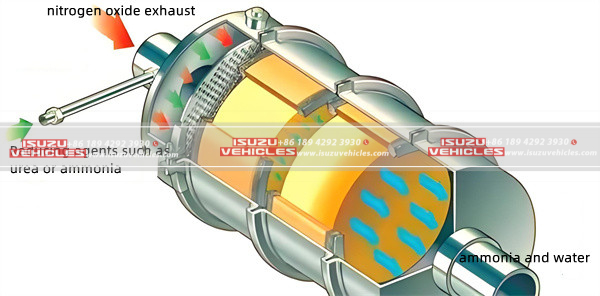
Malfunctions in the aftertreatment system—such as urea pump failure, clogged/damaged urea nozzles, substandard urea quality, or exhaust pipe leaks—impair urea spray atomization. Urea system failures cause crystallization, reducing catalytic efficiency. Use high-quality urea. Consequently, urea solution is directly sprayed onto the exhaust pipe walls. Since exhaust pipes operate at 500°C, water rapidly evaporates, forming crystals. Prolonged accumulation worsens crystallization, reducing SCR catalyst efficiency and causing power loss. Therefore, always select premium urea to ensure vehicle performance and safety.