
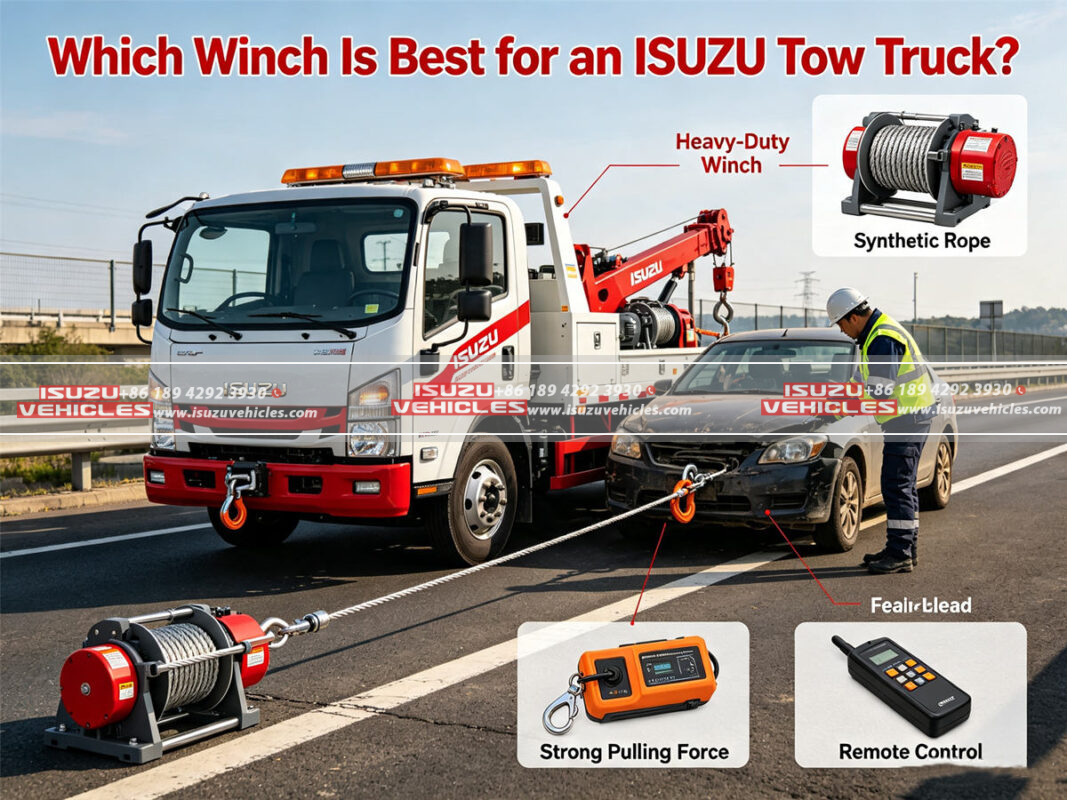
When people think about a tow truck, they often picture the wheel-lift, flatbed, or recovery boom. However, one of the most important components on any ISUZU tow truck is the winch. It is the primary tool used to pull disabled vehicles out of ditches, load accident-damaged cars onto flatbeds, recover vehicles stuck in mud or snow, and reposition heavy equipment in situations where driving is impossible.
Choosing the right winch is not simply about selecting the model with the highest pulling force. An oversized winch may add unnecessary weight and cost, while an undersized unit may struggle during demanding recovery operations. The best winch is one that matches the truck’s recovery capability, intended workload, and daily operating environment.
Whether you manage a roadside assistance fleet, operate a municipal recovery service, or provide commercial towing for heavy-duty vehicles, understanding the different types of winches and their applications will help you build a more efficient and reliable recovery vehicle.
Why the Winch Is the Heart of an ISUZU Tow Truck
Every recovery operation begins with establishing a secure connection between the tow truck and the disabled vehicle. While lifting systems and wheel-lifts support transportation, it is usually the winch that performs the first and most demanding task—pulling the vehicle into a recoverable position.
On an ISUZU tow truck, the winch is commonly used to:
- Load vehicles onto flatbeds
- Recover vehicles from roadside ditches
- Pull cars from mud, sand, or snow
- Reposition damaged vehicles after collisions
- Recover light commercial trucks
- Assist in equipment relocation
Without a dependable winch, even the strongest tow truck may struggle to perform safely in difficult recovery situations.
A well-matched winch not only improves productivity but also reduces operator effort and minimizes the risk of damage to both the recovery vehicle and the disabled vehicle.
Hydraulic vs. Electric Winches: Which Is Better?
The first decision when selecting a winch is choosing between hydraulic and electric systems. Both have advantages, but they are designed for different operating conditions.
Hydraulic Winches
Hydraulic winches are the most common choice for professional ISUZU tow trucks.
Their advantages include:
- Continuous pulling power
- Excellent durability
- Reliable operation during long recovery jobs
- Better heat management
- High pulling capacity
Because they are powered by the truck’s hydraulic system, they can operate for extended periods without overheating.
This makes them ideal for:
- Commercial towing
- Municipal recovery fleets
- Heavy roadside assistance
- Frequent daily operations
For companies that recover vehicles every day, hydraulic winches are generally the preferred option.
Electric Winches
Electric winches are powered directly by the vehicle’s electrical system.
Their benefits include:
- Simpler installation
- Lower initial cost
- Reduced system complexity
- Convenient operation
They are suitable for:
- Light-duty recovery
- Occasional towing
- Small service fleets
However, extended use can generate heat, making electric winches less suitable for continuous commercial recovery operations.
Choosing the Right Pulling Capacity
Many buyers assume that the highest-capacity winch is always the best investment. In reality, selecting the correct pulling force depends on the vehicles being recovered.
A useful guideline is to choose a winch rated well above the maximum expected recovery load, allowing an additional safety margin for difficult conditions.
Typical applications include:
| Vehicle Type | Recommended Winch Capacity |
|---|---|
| Passenger cars | 4–6 tons |
| SUVs and pickups | 5–8 tons |
| Light commercial vans | 6–10 tons |
| Medium-duty trucks | 8–12 tons or higher |
The actual recovery force may need to be greater than vehicle’s weight because additional resistance is created by:
- Mud
- Sand
- Snow
- Steep slopes
- Collision damage
- Locked wheels
Professional recovery operators always consider these conditions before selecting equipment.
Single or Dual Winch Systems
Some larger ISUZU tow trucks use two independent hydraulic winches.
Dual winches provide:
- Greater recovery flexibility
- Multi-directional pulling
- Improved vehicle stabilization
- Easier accident recovery
- Better handling of complex recoveries
Although more expensive, dual systems significantly increase operational capability for professional recovery fleets.
Cable Selection Is Just as Important as the Winch
The winch itself is only part of the recovery system. Choosing the right cable has a major impact on safety, durability, and operating efficiency.
Steel Wire Rope
Steel cables remain the traditional choice for commercial recovery.
Advantages include:
- Excellent abrasion resistance
- High durability
- Strong pulling performance
- Reliable under harsh conditions
They perform particularly well when recovering heavy vehicles on rough construction sites.
However, steel cables require regular lubrication and careful inspection to prevent corrosion and broken wire strands.
Synthetic Rope
Many modern recovery operators now prefer synthetic ropes.
Benefits include:
- Lower weight
- Easier handling
- Improved operator safety
- Reduced recoil if failure occurs
- Better floating capability in water
Although synthetic ropes require protection from abrasion and excessive heat, they have become increasingly popular for professional roadside recovery.
The choice between steel and synthetic often depends on operating conditions and fleet maintenance practices.
Features That Improve Recovery Efficiency
Modern ISUZU tow trucks benefit from more than simply having a powerful winch. Several additional features can greatly improve recovery performance and operator safety.
Wireless remote controls allow operators to manage the winch while maintaining a clear view of the recovery area, reducing the need to stand close to moving cables or vehicles. Variable-speed controls make it easier to perform delicate loading operations without sudden movements, particularly when recovering luxury vehicles or heavily damaged cars.
Automatic load-holding brakes help prevent unintended cable movement during lifting or pulling, while fairlead systems guide the cable smoothly onto the drum, reducing uneven winding and extending cable life. Many professional recovery bodies also incorporate integrated storage for recovery straps, shackles, snatch blocks, and other rigging equipment, allowing crews to respond quickly to different recovery scenarios.
These features may seem secondary compared with pulling capacity, but together they contribute to safer operations, faster recovery times, and improved equipment longevity.
Selecting the Best Winch for Long-Term Performance
The best ISUZU tow truck winch is not necessarily the largest or most expensive—it is the one that matches the truck’s intended workload and operating environment. For companies performing frequent commercial recoveries, hydraulic winches with appropriate pulling capacity provide the durability and continuous performance needed for daily use. Operators handling lighter roadside assistance may find high-quality electric systems sufficient for their requirements.
Choosing the correct winch also means considering cable type, recovery accessories, maintenance requirements, and future business growth. Investing in a balanced recovery system improves productivity while helping protect both equipment and operators during demanding recovery operations.
For businesses developing a versatile commercial fleet, an ISUZU tow truck can work alongside a cherry picker truck for elevated maintenance tasks and a crane truck for material handling and lifting operations. Together with dependable ISUZU Vehicles, these specialized solutions deliver the reliability, flexibility, and professional performance required for roadside assistance, municipal services, construction support, and industrial transportation across a wide range of industries.