

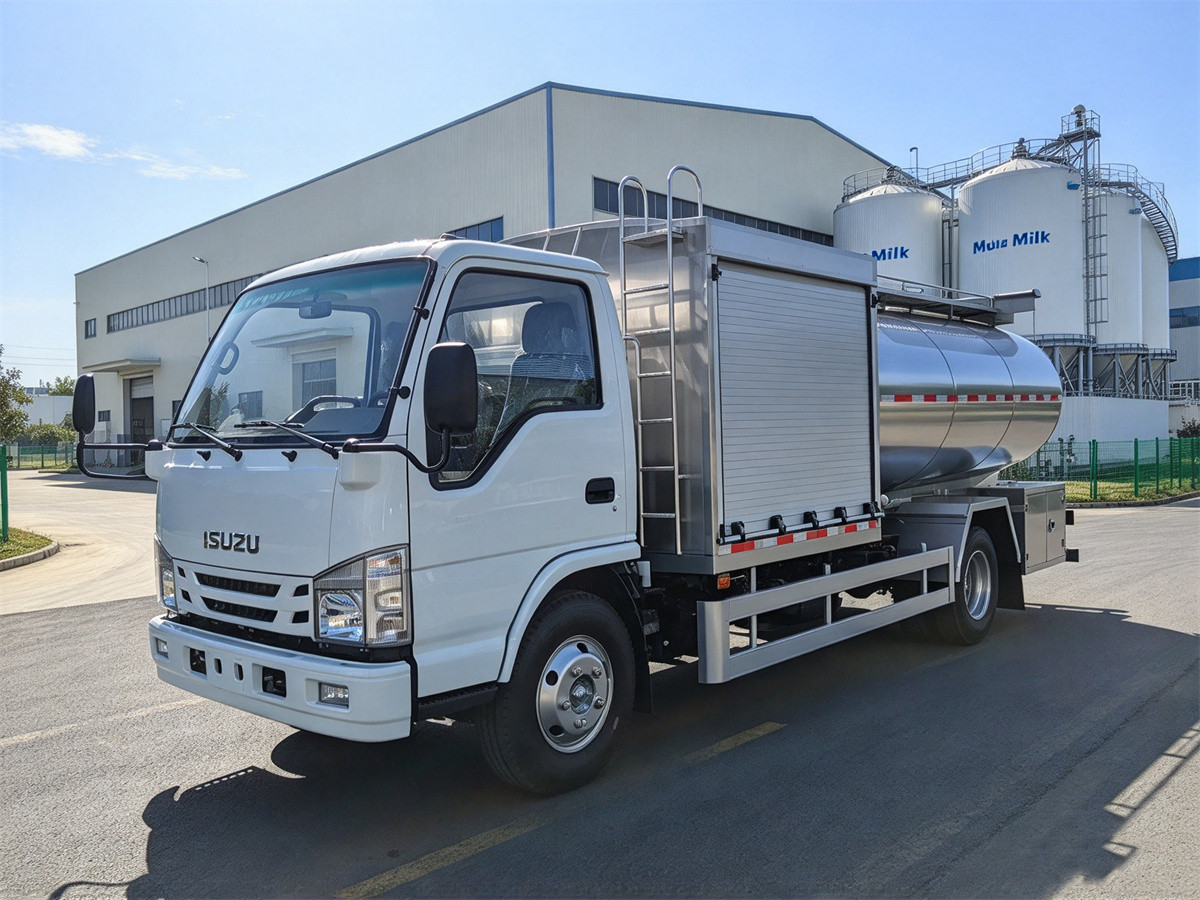
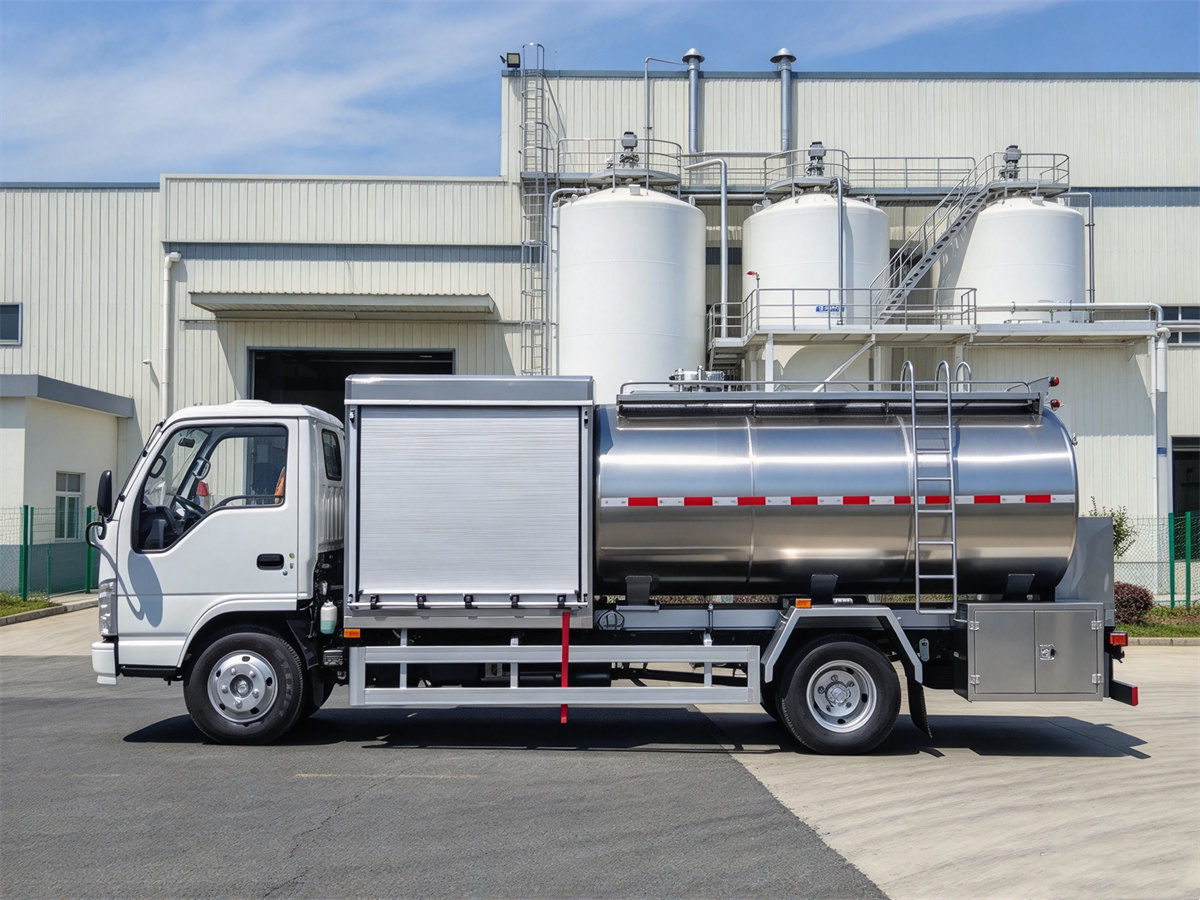
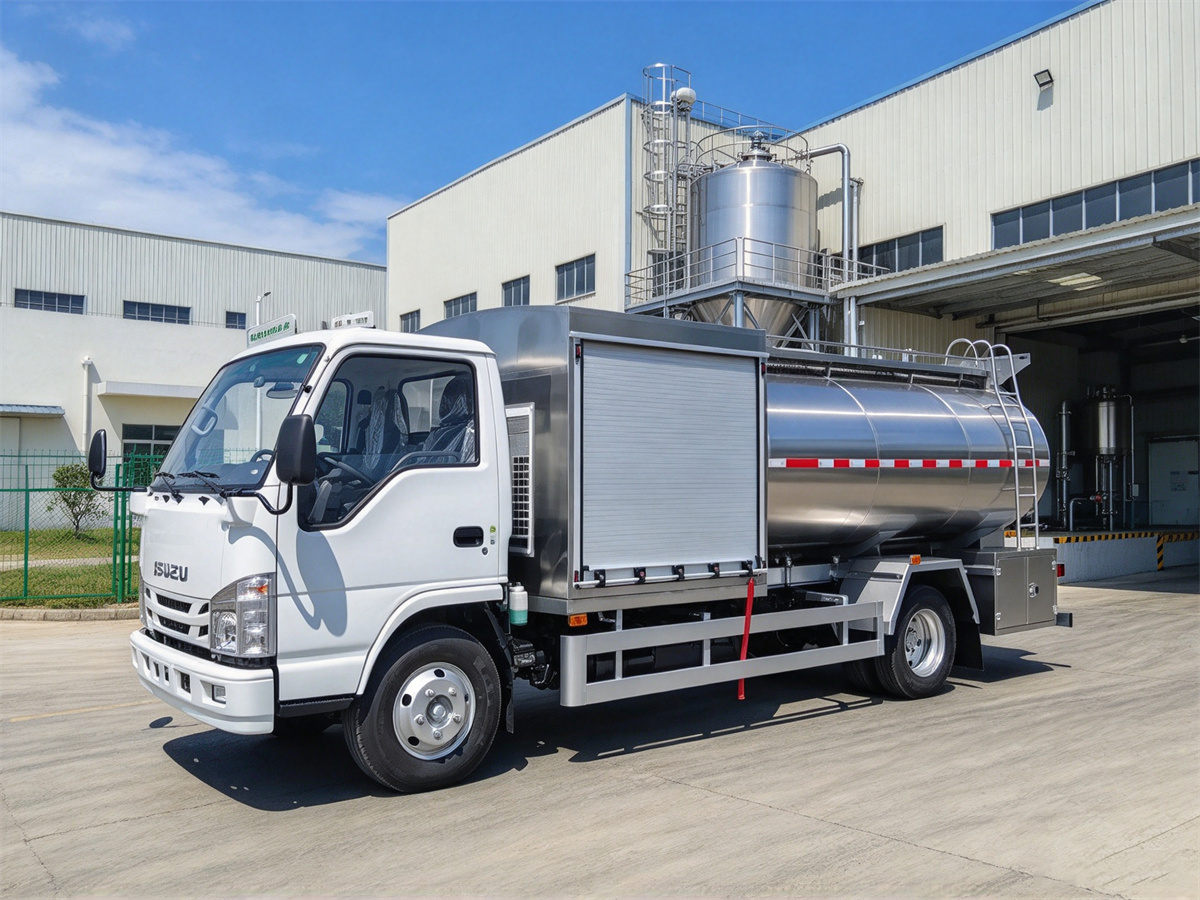
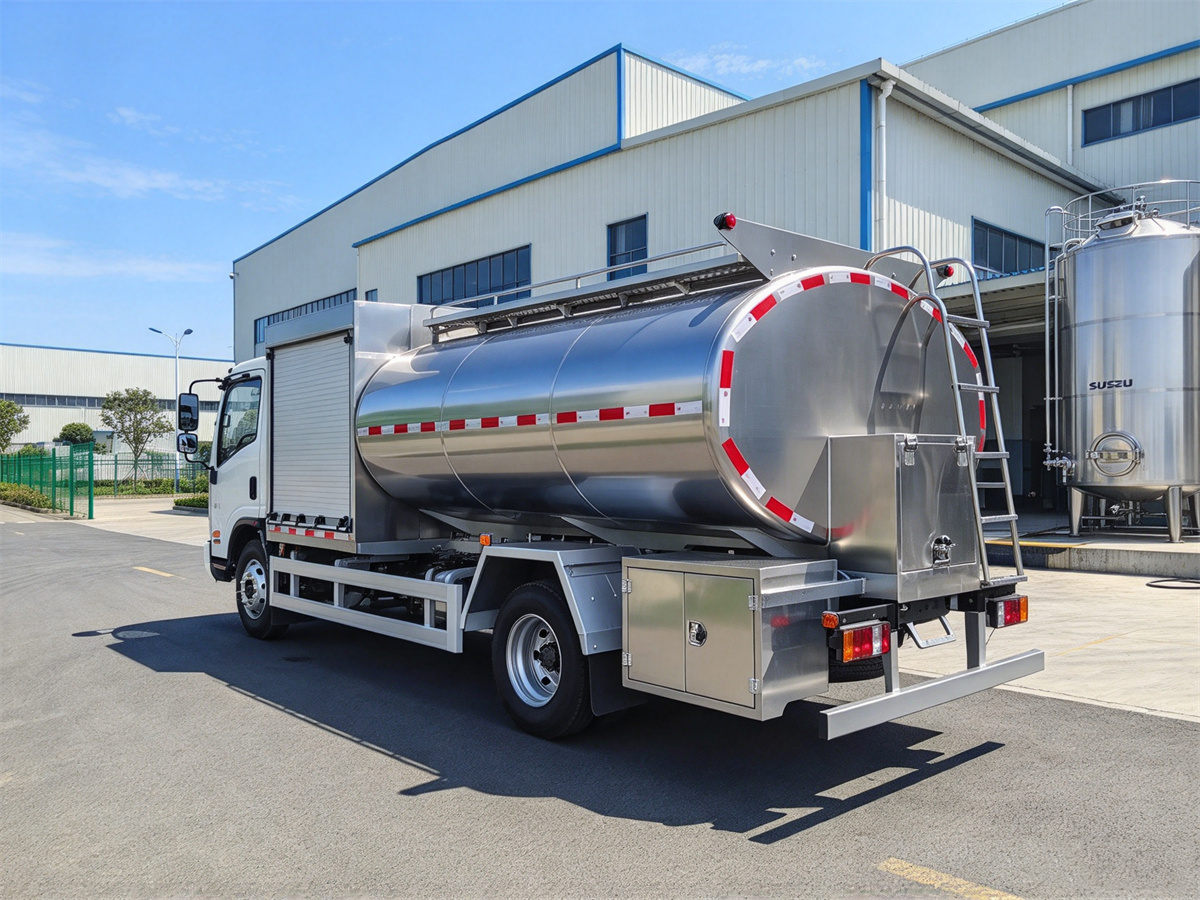
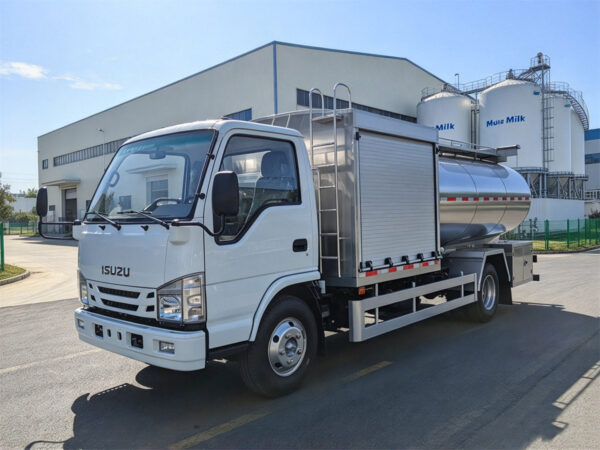
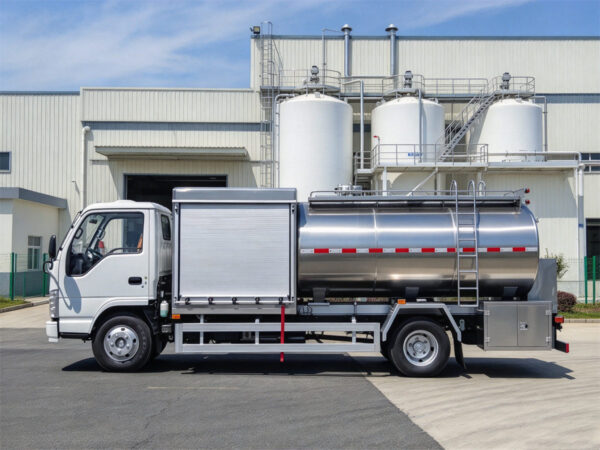
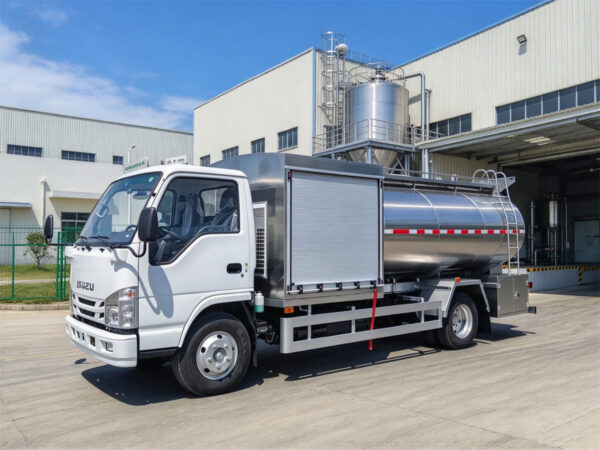
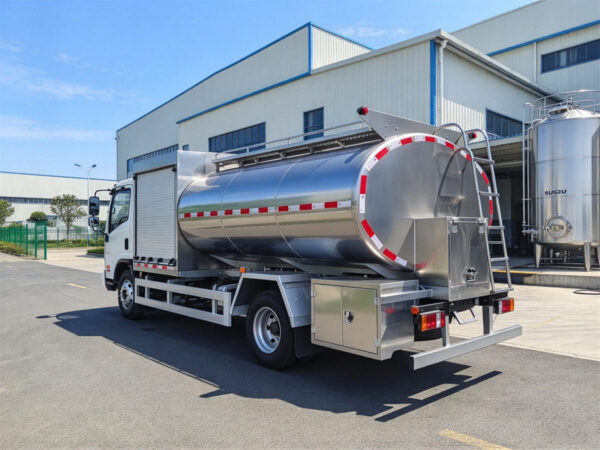
ISUZU 12 CBM Raw Milk Tanker Truck
The ISUZU ELF 12 CBM Raw Milk Tanker Truck is designed for the hygienic collection and transportation of raw milk from dairy farms, milk collection centers, and agricultural production facilities to dairy processing plants. Built on an ISUZU ELF 4×2 chassis and manufactured in China, this specialized tanker combines a commercial vehicle platform with a food-grade stainless steel tank, thermal insulation, and sanitary milk transfer equipment to support reliable dairy logistics. With a nominal tank capacity of 12,000 liters, the vehicle is intended for milk transportation operations that require careful handling of liquid food products, effective temperature retention, and convenient loading and unloading procedures.
The truck features a left-hand-drive cab with power steering and seating for approximately two to three people, providing a practical working environment for drivers and operating personnel. Its proposed overall dimensions are approximately 7,600 × 2,400 × 3,000 mm, with a wheelbase of around 4,175 mm, while the diesel-powered chassis is specified with an ISUZU 4HK1-TCG40 engine producing approximately 190 HP and a six-speed manual transmission. These preliminary chassis specifications must be matched to the manufacturer’s approved vehicle configuration before production or registration.
The tanker body is constructed from food-grade SUS 304-2B stainless steel, with a proposed inner tank thickness of approximately 3 mm and an insulated structure using 80 mm polyurethane foam. The smooth internal surface, sanitary sealing components, dedicated milk transfer connections, and optional clean-in-place (CIP) system are intended to facilitate hygienic handling and routine cleaning between deliveries. Depending on customer requirements, the tank can be configured with two or three compartments, allowing separate batches of milk to be transported when the final tank design and operating procedures permit.
For businesses evaluating different commercial vehicles for food distribution and specialized transportation, this model can be considered alongside refrigerated trucks for temperature-controlled cargo, box trucks for enclosed goods transportation, and cargo trucks for general freight operations. Its specialized stainless steel tank makes the ISUZU ELF raw milk tanker particularly relevant to dairy cooperatives, milk collection companies, agricultural enterprises, and food-processing businesses that require dedicated equipment for bulk liquid milk transportation.
Features
1. Food-Grade SUS 304-2B Stainless Steel Tank
The most important feature of the ISUZU ELF raw milk tanker is its SUS 304-2B stainless steel tank, which is designed for contact with food products when the material grade, surface finish, fabrication quality, and cleaning procedures meet the applicable sanitary requirements. Stainless steel offers good corrosion resistance and a smooth surface suitable for hygienic milk handling, helping operators maintain appropriate cleanliness during repeated collection and delivery cycles. The proposed 3 mm inner tank wall provides a preliminary design specification, while the final thickness and reinforcement structure should be confirmed through engineering calculations and applicable vehicle standards.
The tank can be manufactured in a cylindrical or elliptical configuration, depending on the available chassis space, tank volume, center-of-gravity requirements, and customer preferences. A stainless steel exterior shell gives the tanker a clean, professional appearance, while sanitary manholes, sealed access covers, and food-grade gaskets help protect the transported milk from external contamination when properly maintained.
2. Insulated Tank for Temperature Retention
Raw milk is sensitive to temperature changes, making thermal management an important consideration during collection and transportation. This tanker is specified with approximately 80 mm of polyurethane foam insulation between the inner tank and outer shell, helping reduce heat transfer between the milk and the surrounding environment. The insulated structure is intended to slow temperature changes during transportation, particularly when the vehicle operates between farms, collection stations, and processing facilities.
The preliminary design targets a temperature change of approximately 1–2°C over 24 hours under suitable conditions; however, actual performance depends on initial milk temperature, ambient temperature, tank fill level, insulation quality, solar exposure, and the duration of transportation. Insulation alone does not actively refrigerate milk, so milk must be cooled to the required temperature before loading and maintained according to applicable dairy food-safety requirements throughout the delivery process.
3. Large-Capacity Milk Transportation System
With a nominal capacity of 12,000 liters (12 CBM), the tank is intended to support bulk milk collection and delivery, helping dairy operators consolidate transportation between multiple collection points and a central processing facility. The proposed configuration offers two or three internal compartments as an option, subject to the final tank design, cleaning arrangements, and operating requirements. Compartmentalization can provide greater flexibility when separate batches must be kept apart, while internal anti-surge baffles help reduce liquid movement during acceleration, braking, and cornering.
The tank includes a top manhole or sanitary filling connection and a dedicated stainless steel milk outlet with a proposed diameter of approximately 51 mm. A sanitary drain arrangement supports milk discharge and cleaning operations, while optional level indicators and flow meters can help operators monitor the loading process and record delivered quantities. The finished tank layout should ensure that compartments can be drained and cleaned effectively without leaving inaccessible areas where milk residues may accumulate.
4. Hygienic Milk Loading and Unloading Equipment
The milk transfer system can be equipped with food-grade stainless steel pipelines, sanitary valves, sealed couplings, and a dedicated milk transfer pump as required by the customer. Depending on the installation, the truck can use gravity discharge or pump-assisted unloading to transfer raw milk into receiving tanks at dairy plants and collection facilities. A sanitary pump can improve transfer flexibility where site conditions do not provide sufficient gravity head, while suitable quick couplings help operators connect and disconnect the milk pipeline efficiently.
Optional flow-metering equipment can support the recording of transferred milk volumes, and a liquid-level indicator can provide additional assistance during filling operations. All milk-contact components should be selected for compatibility with dairy products and the cleaning chemicals used in the facility. Proper drainage, hygienic connection procedures, and regular inspection of seals and valves are essential for minimizing contamination risks during repeated loading and unloading cycles.
5. Clean-in-Place System and Sanitary Design
Maintaining the cleanliness of a milk tanker is essential because residual milk can support bacterial growth and affect the quality of subsequent loads. The proposed configuration can include a clean-in-place (CIP) system with 360-degree rotary spray balls to distribute cleaning solution across the internal tank surfaces. When correctly engineered, the system can reduce the need for manual entry into the tank and help make routine cleaning more consistent, although cleaning effectiveness depends on spray coverage, flow rate, temperature, chemical concentration, contact time, and the tank’s internal geometry.
The smooth internal stainless steel surface and food-grade sanitary gaskets are intended to support effective cleaning and reduce the accumulation of milk residues around joints and connections. An automatic CIP arrangement can be specified according to the customer’s existing dairy sanitation procedures, while sanitary manholes and accessible inspection points support periodic examination of the tank interior. The final equipment package should be designed to meet the relevant food-contact and hygiene standards of the destination market.
6. ISUZU ELF Chassis and Driving Configuration
The ISUZU ELF 4×2 chassis provides the vehicle platform for transporting the specialized milk tank and its associated equipment. The proposed powertrain consists of an ISUZU 4HK1-TCG40 diesel engine with an approximate displacement of 5.2 liters and an output of around 190 HP, paired with a six-speed manual transmission. Power steering supports maneuverability during collection and delivery work, while the left-hand-drive cab is suitable for markets where this driving configuration is required.
The preliminary vehicle dimensions of approximately 7,600 × 2,400 × 3,000 mm are intended as a starting point for tank-body design and vehicle layout. Final dimensions, axle distribution, tire specifications, and engine certification must be confirmed against the selected chassis. In particular, the vehicle’s approved gross weight and payload must account for the tank body, insulation, chassis, driver, accessories, and the weight of the milk being carried. A full 12,000-liter load of milk can weigh approximately 12 tonnes, so a chassis with a 15-tonne gross vehicle weight rating would not be suitable for carrying the full tank volume legally; a higher-rated chassis or a reduced permitted filling volume is necessary.
7. Practical Applications in Dairy Logistics
The ISUZU ELF 12 CBM Raw Milk Tanker Truck is intended for dairy farms, milk collection stations, agricultural cooperatives, dairy processing plants, and food logistics companies that transport raw milk in bulk. Its insulated stainless steel tank and sanitary transfer connections provide a dedicated solution for moving milk from collection points to processing facilities, while optional pumping, metering, and CIP equipment can be tailored to the requirements of individual operations.
By combining a commercial truck chassis with a specialized food-grade tank, the vehicle can support organized milk collection routes and repeat deliveries between farms and dairy facilities. Correct loading procedures, effective cleaning, suitable temperature management, and compliance with certified vehicle weight limits remain essential to maintaining milk quality and operating the tanker safely.
Specifications
| Item | Specification |
|---|---|
| Product Name | ISUZU ELF 12 CBM Raw Milk Tanker Truck |
| Chassis Brand | ISUZU ELF |
| Drive Type | 4×2 |
| Steering | Left-hand drive, power steering |
| Cab Capacity | 2–3 persons |
| Overall Dimensions (L × W × H) | Approx. 7,600 × 2,400 × 3,000 mm |
| Wheelbase | Approx. 4,175 mm |
| Front / Rear Track | Approx. 1,680 / 1,650 mm |
| Maximum Driving Speed | Approx. 90 km/h |
| Fuel Type | Diesel |
| Country of Manufacture | China |
| Gross Vehicle Weight (GVW) | Approx. 15,000 kg (proposed) |
| Curb Weight | Approx. 6,800 kg (proposed) |
| Rated Payload | Approx. 8,200 kg (proposed) |
| Front Axle Load Capacity | Approx. 5,000 kg (proposed) |
| Rear Axle Load Capacity | Approx. 10,000 kg (proposed) |
| Total Axle Load Capacity | Approx. 15,000 kg (proposed) |
| Tires | 8.25R16 radial tires |
| Number of Tires | 6 + 1 spare |
| Engine Brand | ISUZU |
| Engine Model | 4HK1-TCG40 (proposed; verify compatibility) |
| Engine Type | Four-cylinder, four-stroke, turbocharged and intercooled diesel |
| Displacement | Approx. 5,193 cc |
| Rated Power | Approx. 190 HP |
| Emission Standard | Euro V, subject to certification |
| Transmission | Manual |
| Forward / Reverse Gears | 6 forward + 1 reverse |
| Clutch | Single-plate dry clutch |
| Fuel Tank Capacity | Approx. 100–160 L |
| Tank Capacity | 12,000 L (12 CBM) nominal |
| Tank Material | Food-grade SUS 304-2B stainless steel |
| Tank Structure | Insulated cylindrical tank |
| Tank Shape | Cylindrical or elliptical |
| Inner Tank Thickness | Approx. 3 mm |
| Outer Protective Shell | Stainless steel |
| Insulation Material | Polyurethane foam |
| Insulation Thickness | Approx. 80 mm |
| Tank Compartments | 2 or 3, optional |
| Tank Color | Stainless steel finish or customized |
| Milk Loading | Top manhole or sanitary filling connection |
| Milk Discharge | Stainless-steel sanitary outlet |
| Milk Outlet Diameter | Approx. 51 mm |
| Milk Transfer Pump | Sanitary stainless-steel pump, optional |
| Pump Drive | Electric or auxiliary drive, depending on configuration |
| Milk Transfer Pipeline | Food-grade stainless steel |
| Valves and Fittings | Sanitary stainless-steel components |
| Quick Couplings | Food-grade sanitary couplings |
| Discharge Method | Gravity or pump-assisted discharge |
| Flow Meter | Optional |
| Liquid Level Indicator | Optional |
| Manhole Cover | Sanitary sealed manhole |
| Tank Cleaning System | CIP (Clean-in-Place), optional |
| Internal Cleaning Devices | 360° rotary spray balls |
| Internal Tank Surface | Smooth, polished food-contact surface |
| Tank Sealing | Food-grade sanitary gaskets |
| Anti-Surge Baffles | Installed inside the tank |
| Drainage System | Sanitary drain and discharge connections |
| Temperature Retention | Target temperature change of 1–2°C over 24 hours, subject to testing and operating conditions |
| Access Ladder | Stainless steel or corrosion-resistant material |
| Top Walkway | Anti-slip surface, optional |
| Rear Protection | Rear bumper and protective structure |
| Electrical System | 24 V, subject to chassis configuration |
| Sanitary Documentation | Material and food-contact certificates according to market requirements |




Reviews
There are no reviews yet.