
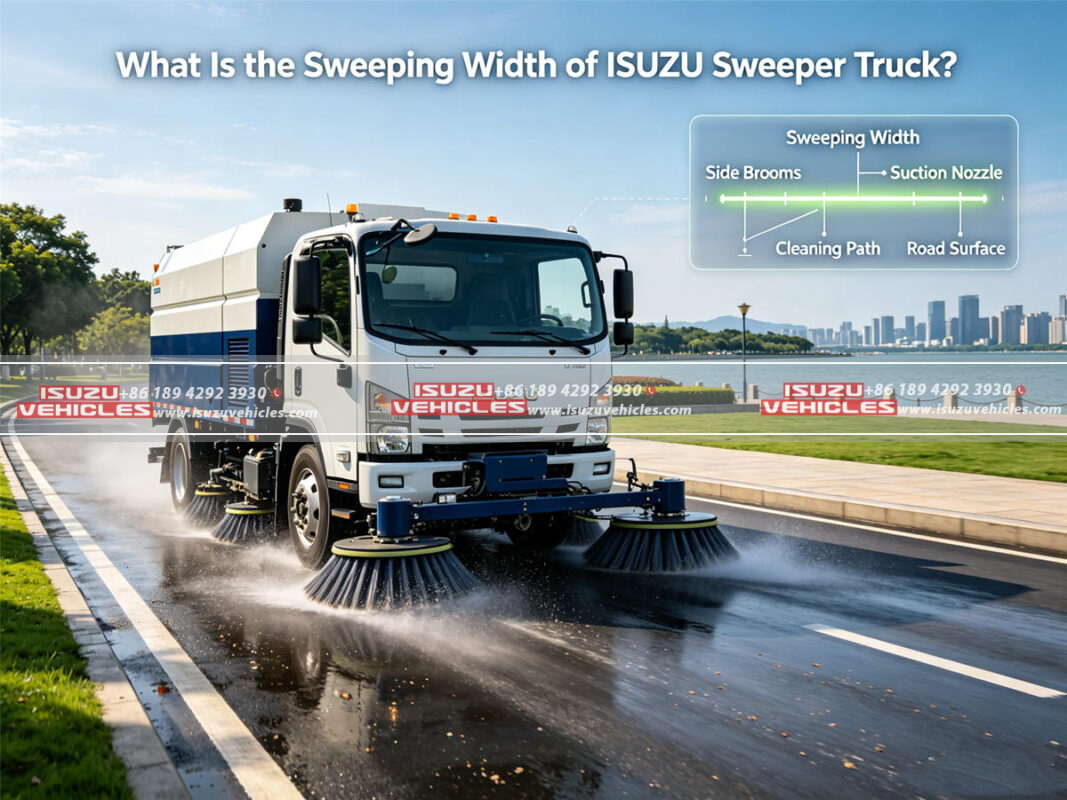
The sweeping width of an ISUZU sweeper truck refers to the maximum lateral width of road surface that the sweeping system can clean during one working pass, and it is one of the most useful specifications for understanding the vehicle’s practical cleaning productivity. Unlike the overall width of the truck, which describes the physical dimensions […]
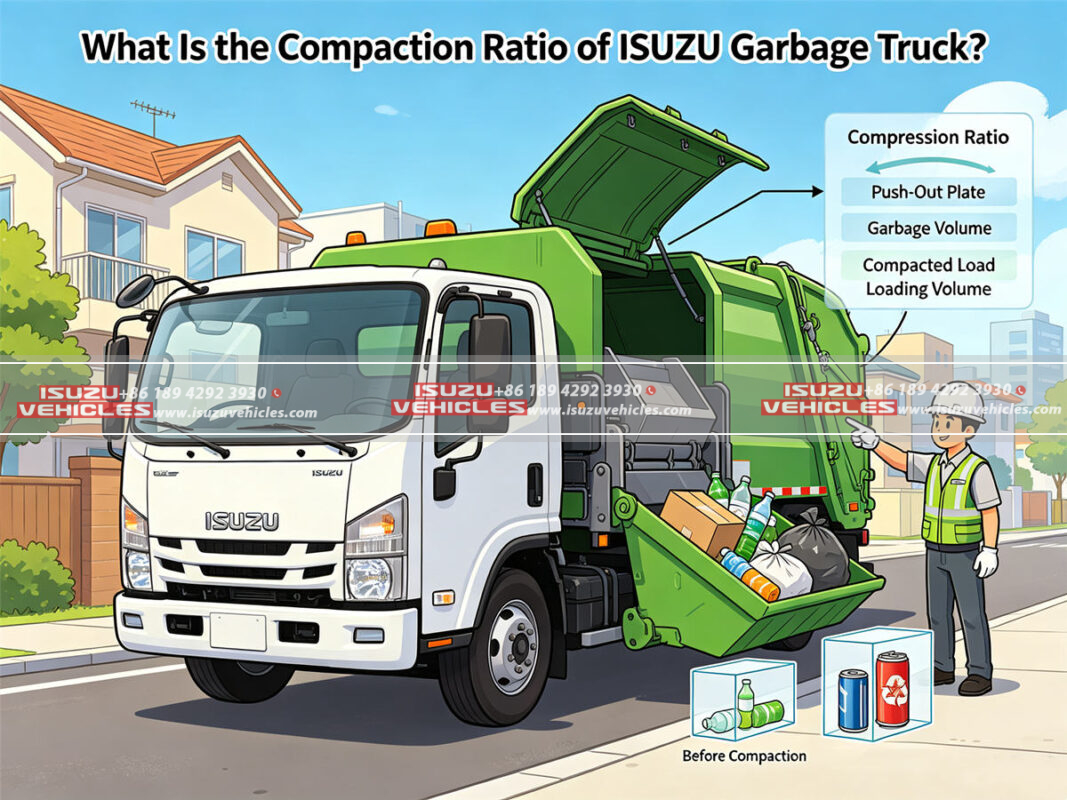
The compaction ratio is one of the most important specifications to understand when evaluating an ISUZU garbage truck because it describes how effectively the vehicle reduces the volume of loose waste before transporting it to a transfer station, treatment facility, or landfill. In simple terms, a compaction ratio of 3:1 means that approximately three cubic […]
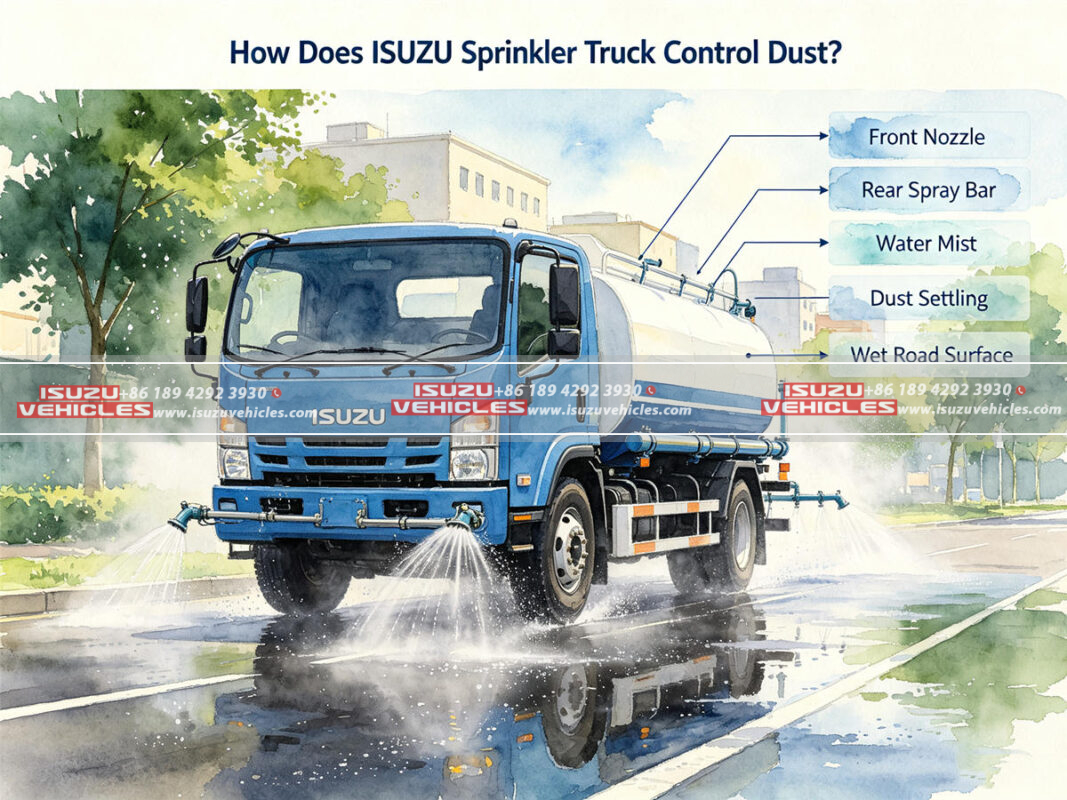
How Does an ISUZU Sprinkler Truck Control Dust? An ISUZU sprinkler truck controls dust primarily by applying a controlled layer of water to dry road surfaces, construction areas, mining roads, industrial yards, and other places where loose particles can easily become airborne, but the process is more sophisticated than simply spraying water from a tank. […]

When choosing a bucket truck for utility maintenance, telecommunications, streetlight servicing, tree trimming, construction, or other elevated work, one of the most important specifications to understand is the platform capacity, because this figure determines how much total weight can safely be carried in the aerial bucket or work platform while the boom is operating at […]
ISUZU Truck Introduction, ISUZU Truck Knowledge
How Much Cargo Can an ISUZU Refrigerated Truck Carry?

How much cargo an ISUZU refrigerated truck can carry depends on the chassis class, refrigerated body size, curb weight, gross vehicle weight, and the specific payload rating of the model, so there is no single cargo capacity that applies to every refrigerated truck. In the current ISUZU range, compact refrigerated vehicles can be designed for […]

How Is an ISUZU Tow Truck Used for Recovery? When a vehicle breaks down, becomes involved in an accident, loses the ability to move, or needs to be transported from one location to another, an ISUZU tow truck provides the equipment needed to recover it safely and efficiently. Unlike an ordinary cargo truck, a recovery […]
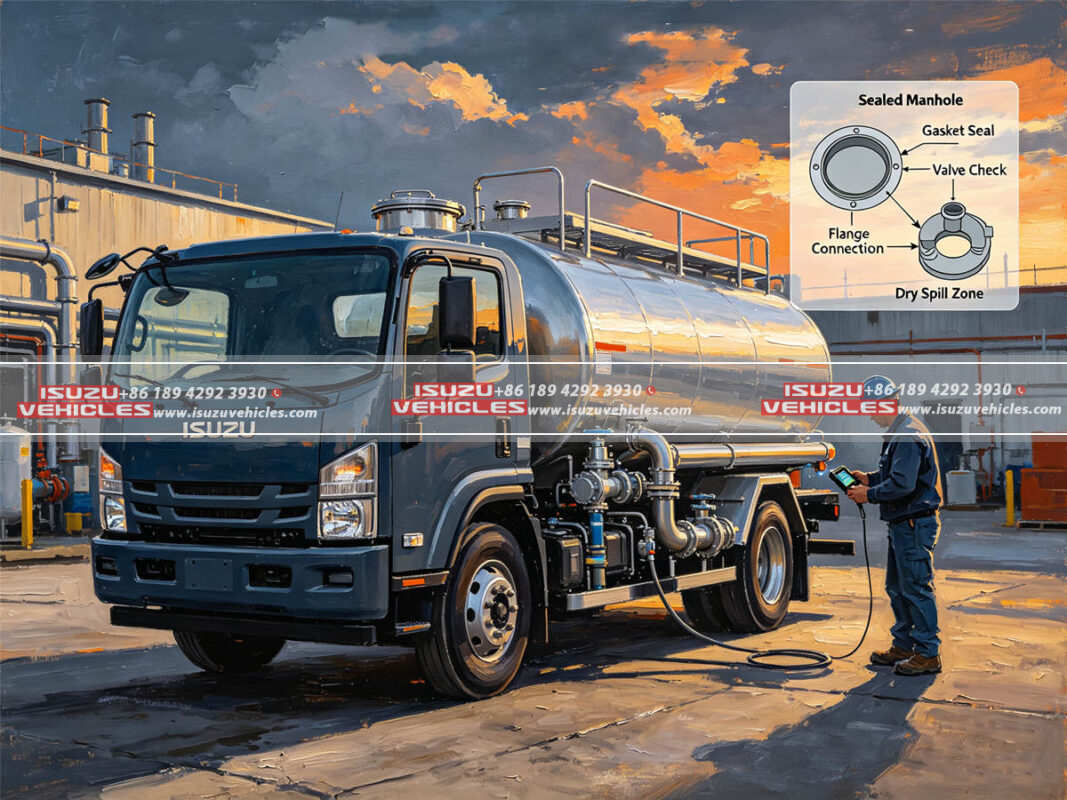
How Does an ISUZU Tanker Truck Prevent Leakage? An ISUZU tanker truck is designed to transport large quantities of water, fuel, oil, chemicals, or other liquid materials while keeping the contents safely contained throughout loading, transportation, and discharge, and preventing leakage is therefore not a single-feature function but the result of coordinated tank construction, sealing, […]

An ISUZU garbage truck compresses waste by combining a rear loading hopper, hydraulic cylinders, a packer or scraper mechanism, an internal push plate, and a high-pressure hydraulic system that repeatedly moves household refuse into the storage body while reducing its volume. This process is much more sophisticated than simply pushing rubbish into a metal container, […]

How Does an ISUZU Truck with Crane Lift Cargo? An ISUZU truck with crane combines road transportation and hydraulic lifting in one practical vehicle, allowing operators to carry cargo to a job site and then load, unload, or position that cargo without depending entirely on a separate mobile crane. A typical truck-mounted crane uses a […]

An ISUZU vacuum truck can hold different amounts of liquid waste, sewage, sludge, and other vacuum-collected materials depending on its tank configuration, chassis size, payload rating, and intended application. There is no single standard capacity for every vacuum truck, because the current ISUZU range includes compact 5,000-liter sewer trucks, 6,000-liter vacuum trucks, 8,000-liter combined jetting-vacuum […]